Step out of Cascais Train Station and you are already within a short walk of the old town, beaches and seafront. That makes getting around Cascais with no car far easier than many first-time visitors expect. A rented bike gives you the most freedom for beaches and coastal sights, while the train handles journeys towards Estoril and Lisbon. Local buses reach places such as Guincho and inland neighbourhoods, and much of central Cascais is best explored on foot. The trick is not choosing one form of transport for the whole trip, but matching each journey to the right option.
Why a bike is the most flexible way to explore Cascais
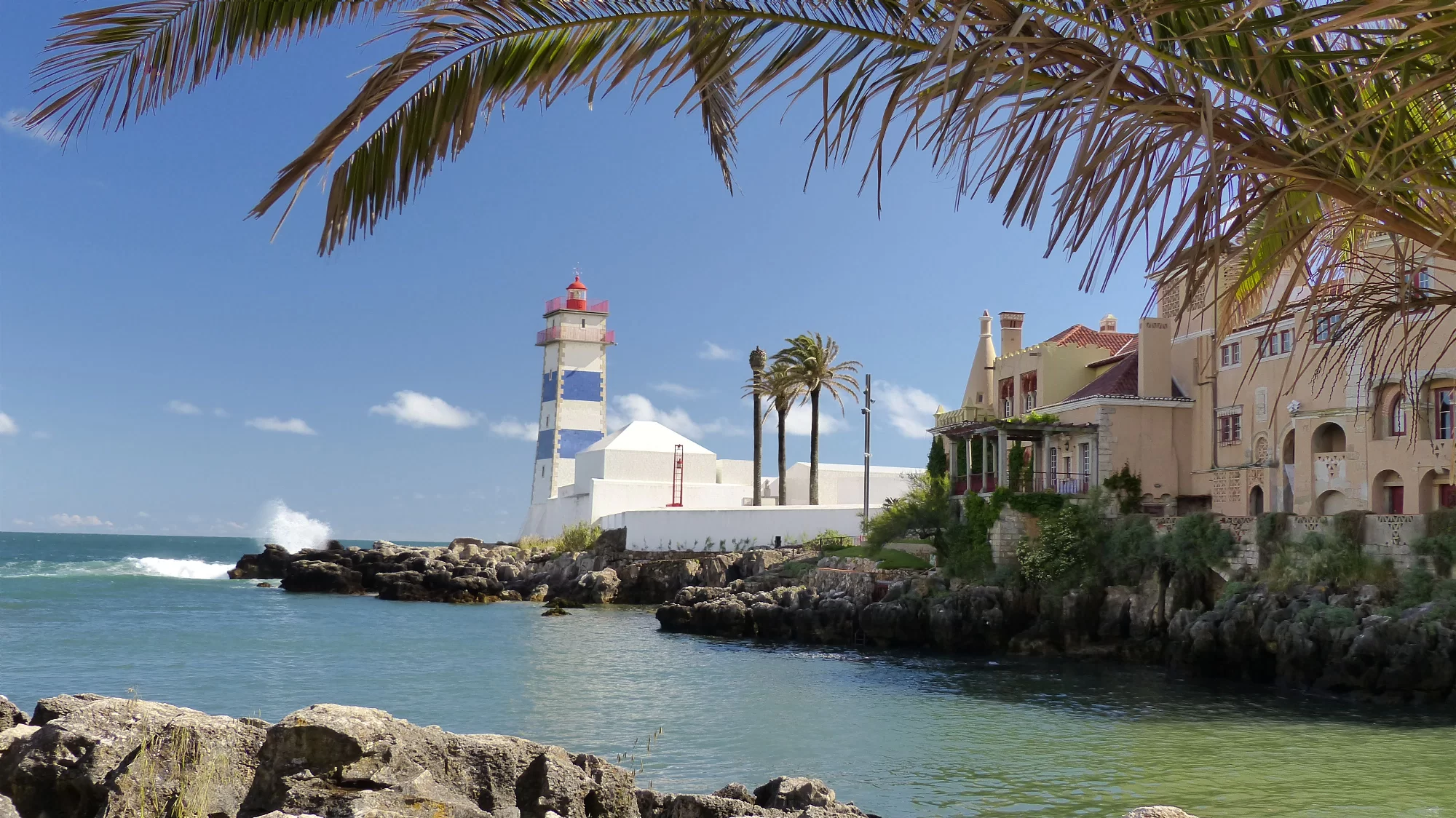
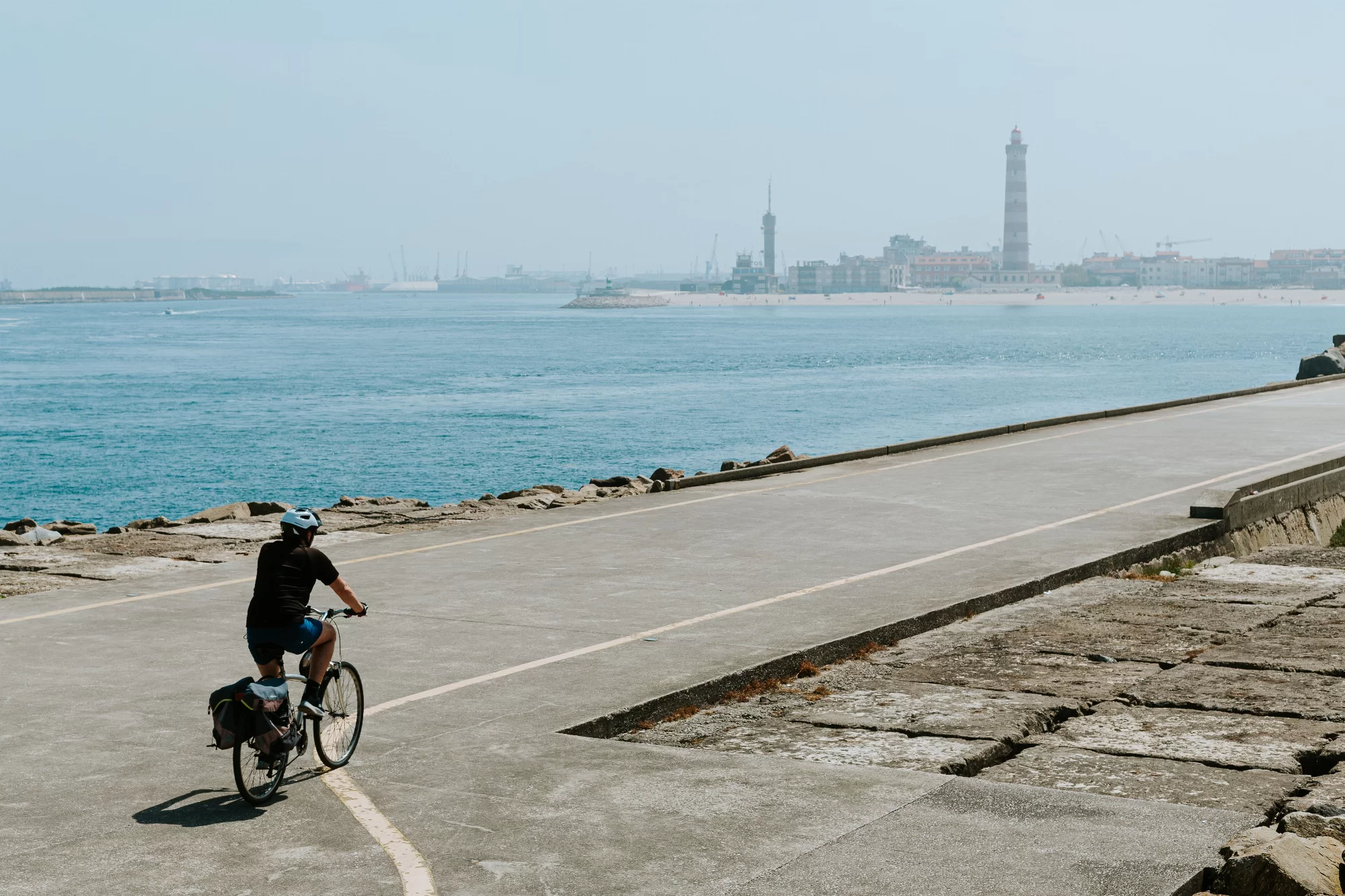
If you want to move beyond the historic centre without arranging your day around timetables, start with a bike. Cascais is particularly well suited to cycling west along the Atlantic coast, where the scenery changes quickly from elegant seafront streets to rocky headlands, open ocean and the broad sands around Guincho. Stops such as Boca do Inferno and Casa da Guia are close enough to combine in one relaxed ride, yet spread out enough that visiting all of them on foot can consume a large part of the day.
The coastal direction is the easy recommendation because navigation is straightforward and dedicated or separated cycling space covers much of the route towards Guincho. Conditions are not effortless, however. Cascais often has an afternoon breeze, and the return from Guincho can feel longer if the wind turns against you. An electric bike is a sensible choice for less regular cyclists, families carrying children or anyone planning to continue onto hillier roads. In the compact centre, ordinary bikes work perfectly well, although cobbles, pedestrians and narrow lanes mean you may need to slow down or walk for short sections.
A car gets you between stops, but a bike lets the coastline become part of the day rather than the view through a window.
For most visitors, renting near the train station is practical because it avoids carrying a bike on public transport and gives you a clear starting point. Before leaving, ask for a lock and confirm where the bike should be parked. Do not leave belongings in baskets while you visit a beach or café. Helmets are a wise choice even on calmer routes, and lights matter if you expect to return near dusk. If strong wind or rain arrives, switch plans rather than treating the ride as a test of endurance.
How the Cascais train fits into a car-free trip
The Lisbon–Cascais railway is the backbone of Cascais public transport. Cascais is the end of the line, so there is little confusion about which direction to take when returning from Lisbon. The station is central rather than hidden on the edge of town, and the line follows the coast through places including Monte Estoril, Estoril, Carcavelos and Oeiras before reaching the Lisbon terminus at Cais do Sodré.
If you're still weighing up how to actually get there, a pre-booked private transfer takes that decision off your plate entirely.
See Transfer Options →Use the train for journeys along that corridor, not for every attraction with a Cascais address. It is excellent for an evening in Lisbon, a beach stop farther east or a one-way coastal walk between neighbouring stations. It does not continue west to Guincho, north to Sintra or out to Cabo da Roca. Those journeys require a bus, bike, taxi or private transfer. This distinction sounds obvious on a map, but it prevents a common mistake: assuming the railway connects the entire municipality because it serves the town centre so well.
Service frequency and ticket arrangements can change, so check the current operator information before travelling, especially early in the morning or late at night. Allow extra time during busy summer weekends, when beach traffic fills platforms and carriages. Bikes may be permitted subject to railway rules and available space, but taking a rental bike aboard at a crowded hour is rarely the smoothest plan. For a mixed train-and-cycle day, confirm the current conditions first and avoid commuter peaks.
Where local buses are genuinely useful
Buses fill the gaps left by the railway. They are useful for Guincho when the weather is unsuitable for cycling, for residential areas away from the coast and for some connections towards Sintra or Cabo da Roca. They also help if you have walked farther than expected and do not fancy retracing the entire route. Cascais transport maps may refer to the municipal mobility network or the regional bus operator, so pay attention to the actual stop, destination display and current journey planner rather than relying on an old blog post with a route number that may have changed.
The biggest limitation is frequency. A central urban bus may be convenient, while a service to a more remote beach or headland can leave a substantial gap between departures. Sundays, holidays and the quieter months may follow different schedules. Check the return journey before setting out, not once you arrive. Cabo da Roca is a classic example: the headland is exposed, facilities are limited compared with Cascais, and waiting a long time in wind or mist is less romantic than it sounds.
A lot of what makes this tricky disappears once you're not the one driving or navigating — that's basically what a private transfer is for.
Arrange a Transfer →- Use buses for weather-proofing: they are the sensible alternative when coastal wind, heat or rain makes cycling uncomfortable.
- Check the stop in both directions: the return stop may sit across a large road or around a corner rather than directly opposite.
- Keep payment options flexible: ticketing systems and accepted cards can vary, so verify current guidance and carry a small backup method of payment.
- Plan around the last practical return: remote coastal stops are not places to assume another bus will appear shortly.
For several people travelling together, anyone with limited mobility or a day involving scattered inland sights, a taxi or pre-arranged transfer may be more efficient than linking multiple buses. That is especially true for luggage journeys or a tightly timed visit to Sintra. Public transport remains cheaper, but saving money loses its appeal if the route involves long waits and two awkward changes.
How far can you comfortably walk in Cascais
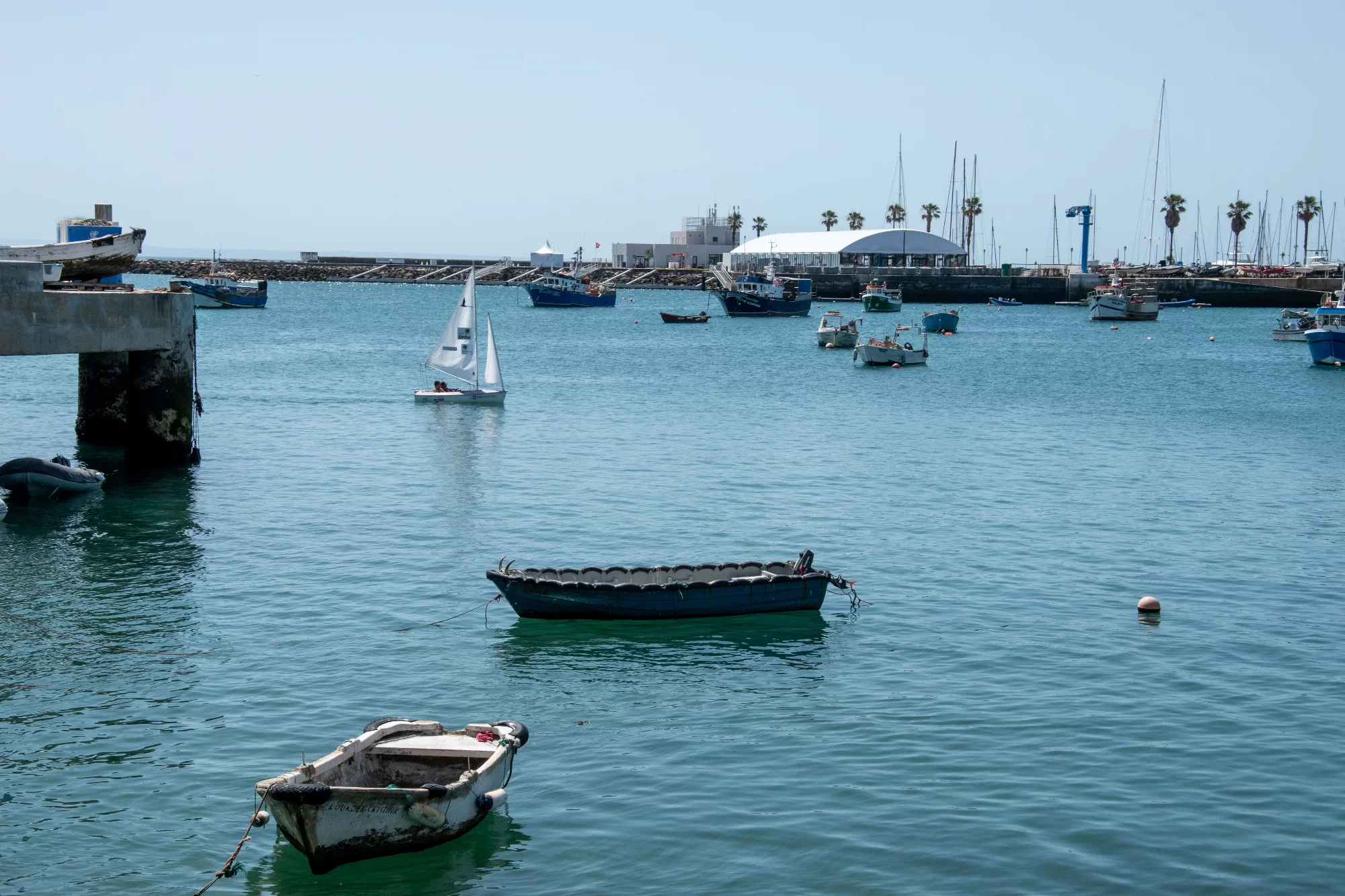
Central Cascais is compact. From the station, allow roughly five to ten minutes for the old town streets and nearby town beaches, depending on your pace and the exact entrance you use. The marina and Citadel area are generally around a 15-minute walk away. Boca do Inferno is closer to 25 or 30 minutes from the station, while Casa da Guia can take around 40 minutes or more. These are useful planning estimates rather than promises; summer crowds, photo stops and uneven paving all slow things down.
Walking west is attractive because the ocean stays close, but the distances accumulate. A stroll to Boca do Inferno and back is easy to fit into a morning. Continuing to Casa da Guia turns it into a more substantial outing. Guincho is not a casual extension of the same walk: it is several kilometres farther, with exposed sections and little shade. Cycle or take a bus unless a long coastal walk is the main purpose of your day.
East of Cascais, the seafront promenade towards Monte Estoril and Estoril makes another good walk. Allow around 30 to 40 minutes to reach central Estoril at an unhurried pace, more if you stop at beaches along the way. The train is ideal for the return, creating a simple one-way route. Comfortable shoes matter because Cascais combines smooth promenade, polished stone paving, cobbles and occasional slopes. Wheelchair users and families with pushchairs will usually find the waterfront easier than the oldest interior lanes, although temporary works can affect access.
Door-to-door transport removes most of the friction described above — worth considering if you're travelling with luggage or on a tight schedule.
Book a Transfer →How to combine Cascais transport without wasting time
The best Cascais transport guide is a simple one: divide the area into zones. Walk within the centre, cycle the western coastline, use the train along the eastern coastal corridor and reserve buses or transfers for places beyond those natural routes. Trying to force every outing onto public transport creates unnecessary waiting. Taking taxis for every short distance, meanwhile, removes much of what makes Cascais enjoyable at street level.
- For a first morning: walk through the old town, marina and nearby beaches so you understand the centre before travelling farther.
- For the western coast: rent a bike for Boca do Inferno, Casa da Guia and, if conditions suit your ability, Guincho.
- For Estoril or Carcavelos: take the train one way and consider walking part of the coast on the return.
- For Lisbon: use the direct coastal railway and avoid bringing a car into city traffic.
- For Sintra or Cabo da Roca: compare current bus connections with a guided tour or transfer, particularly if your time is limited.
A car-free stay works best when you leave some room for conditions. Wind may turn a planned ride into a bus day; a sunny evening may tempt you to walk home from Estoril instead of boarding the next train. Cascais gives you that flexibility because the station, centre and waterfront sit close together. Keep cycling at the heart of the coastal part of your visit, then use trains and buses for the journeys they handle well. You will spend less time searching for parking and more time noticing the beaches, streets and Atlantic viewpoints you came to see.