
Cet article n’est disponible qu’en anglais.
At Cabo da Roca, a difference of 50 metres can decide whether someone enjoys the Atlantic view or spends the visit struggling with wind, slopes and nowhere suitable to pause. This guide focuses on the questions to ask before travelling, covering drop-off arrangements, walking surfaces, rest opportunities, toilets and the flexibility offered by a private driver. Cabo da Roca accessibility can vary with maintenance, weather and individual needs, so current, specific answers matter more than a general label such as “accessible.”
Why an access label does not tell the whole story
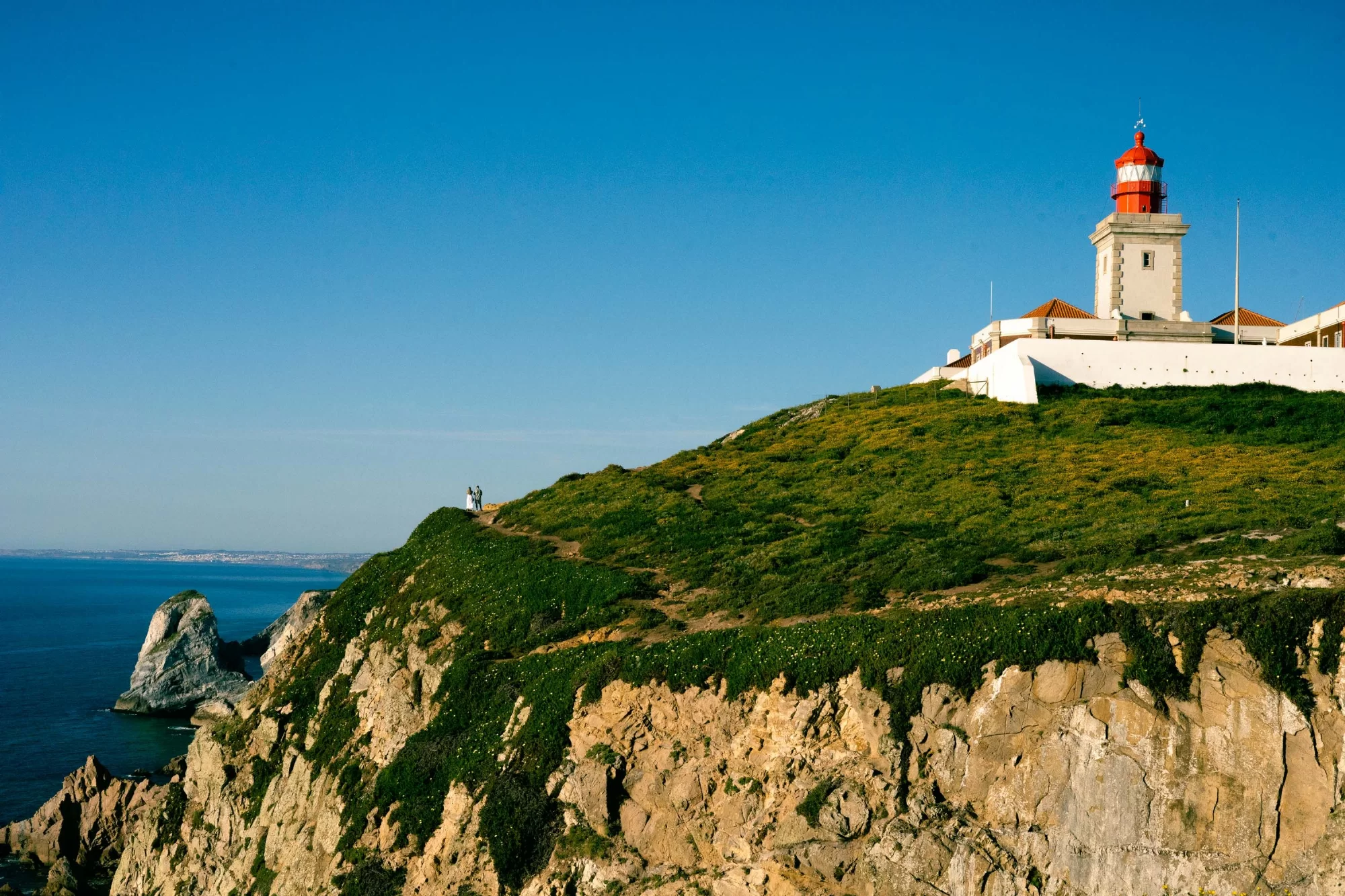
Cabo da Roca is an exposed headland in the municipality of Sintra, not a purpose-built indoor attraction. The principal visitor area is relatively compact, but that does not automatically make every part easy for wheelchairs, walking frames or people who cannot stand for long. A surface may be manageable for one visitor yet tiring for someone using a small-wheeled chair. A gentle-looking incline can also feel considerably harder in a strong Atlantic wind.
Separate the essential experience from the optional ground around it. For many visitors, the goal is simply to reach a safe viewpoint, see the ocean and the Cabo da Roca monument, take a photograph and return comfortably to the vehicle. Paths extending towards the cliffs are not necessary for that experience and may involve rougher, more exposed terrain. Barriers should always be respected, regardless of mobility or weather.
Cabo da Roca does not need to be a long walk to be memorable; the right drop-off and enough time can matter far more than distance covered.
Ask these seven questions before leaving
Conditions and facilities can change, so contact the transport provider or relevant local visitor service as close to the date as practical. Describe the traveller’s actual needs rather than asking only whether the site is accessible. “Can walk 30 metres with a stick but needs a seat afterwards” gives someone a much better basis for answering than “has limited mobility.”
C’est l’un des itinéraires que nos chauffeurs-guides connaissent particulièrement bien, si vous préférez vous installer et laisser quelqu’un d’autre s’occuper de la journée.
Découvrir les tours →- How close can the vehicle stop? Ask for the approximate distance between the permitted drop-off point and the main viewing area, including whether the route has a kerb, slope or loose surface.
- Is the route step-free? Step-free does not necessarily mean level or smooth. Confirm the likely surface and whether a wheelchair user would need assistance.
- Are seats available? Find out whether there is somewhere to rest outdoors and whether any indoor seating depends on a facility being open.
- Is there a suitable toilet? Ask whether an accessible toilet is currently available, open and reached without steps. Do not assume that the presence of toilets means they meet every access need.
- Can mobility equipment be carried? A folding wheelchair, rollator or scooter may require a particular vehicle and boot size. Give dimensions where possible.
- How exposed is the visit likely to be? Check wind, rain and temperature rather than looking only at the forecast for central Sintra or Cascais.
- Can the schedule change on the day? Confirm whether an earlier return, a shorter stop or a weather-related change is possible without leaving the traveller stranded.
Choose transport around the traveller, not the timetable
For an accessible trip from Cascais, public transport may work for some ambulant visitors, but it requires more advance checking. Boarding arrangements, seat availability, the space for mobility equipment and the distance from the stop to the desired viewpoint all matter. A busy service can also remove the option of sitting down immediately. Check the current route and vehicle arrangements with the operator rather than relying on an old travel forum or photograph.
A taxi, private transfer or driver-guide is often the more comfortable choice for Cabo da Roca limited mobility visits. Door-to-door travel reduces standing and makes it easier to carry a folded chair or walking frame. A driver can also wait nearby, subject to local stopping and parking rules, so the visit can end when fatigue or cold sets in rather than when the next bus is due. Before confirming, ask whether the vehicle has a high step, how wide the door opens and whether the driver can assist with equipment. Never assume that a standard car is wheelchair accessible.
Cycling is normally an excellent way to explore stretches of the coast, and electric assistance can reduce physical effort. Cabo da Roca is different. The approach involves hills, road traffic and exposure to wind, while an e-bike does not solve balance, mounting or safe stopping difficulties. For someone whose mobility is uncertain, a standard rental bike should not be treated as a mobility aid. A companion who cycles confidently could travel separately, but the person needing reliable access is generally better served by an appropriate vehicle.
Plan rest before it becomes urgent
Do not judge the stop only by walking distance. Standing in wind uses energy, cold can stiffen joints, and concentration is tiring when the ground feels uncertain. Build in time to move slowly without pressure from a group schedule. A warm layer, water and any normally used medication should remain easy to reach rather than buried beneath luggage.
Si vous préférez oublier le parking et les horaires, c’est exactement le genre de journée que nos chauffeurs-guides font régulièrement.
Voir les tours privés →If sitting is essential, confirm a dependable option before arrival. Outdoor benches may be occupied, wet or exposed, while indoor facilities can close or change their arrangements. Some travellers bring a compact seat, but it must be stable in wind and suitable for the user. For many people, the most reliable rest place is the vehicle itself, which is another reason to establish where it can wait or park.
The return journey deserves equal attention. A visitor may manage the outward distance comfortably and then discover that the wind, photographs and time spent standing have used more energy than expected. Agree on a simple signal for turning back, especially if the person dislikes asking a group to shorten its visit.
Make a weather decision, not just a weather check
Cabo da Roca can feel very different from sheltered parts of Sintra. Strong wind is not merely an inconvenience for someone using a cane, crutches, a light wheelchair or a walker; it can affect balance and control. Rain may make uneven sections less predictable, while mist can remove much of the view that justified the journey.
Un tour privé couvre cet itinéraire sans que vous ayez à penser à la logistique — présentez-vous et partez.
Réserver un tour →Decide in advance what conditions would trigger a shorter stop, a later arrival or a change of plan. A private driver-guide offers useful flexibility here because the visit can be assessed on the day without committing to a fixed amount of time outdoors. That still is not an accessibility guarantee: the vehicle, assistance offered and exact route must all be checked individually.
The best Cabo da Roca accessibility plan is specific and modest. Confirm the drop-off, describe the mobility aid, identify a real rest option and keep the visit short enough to remain enjoyable. Reaching one secure viewpoint in comfort is a successful visit; pushing towards rough cliff paths simply to cover more ground is not.