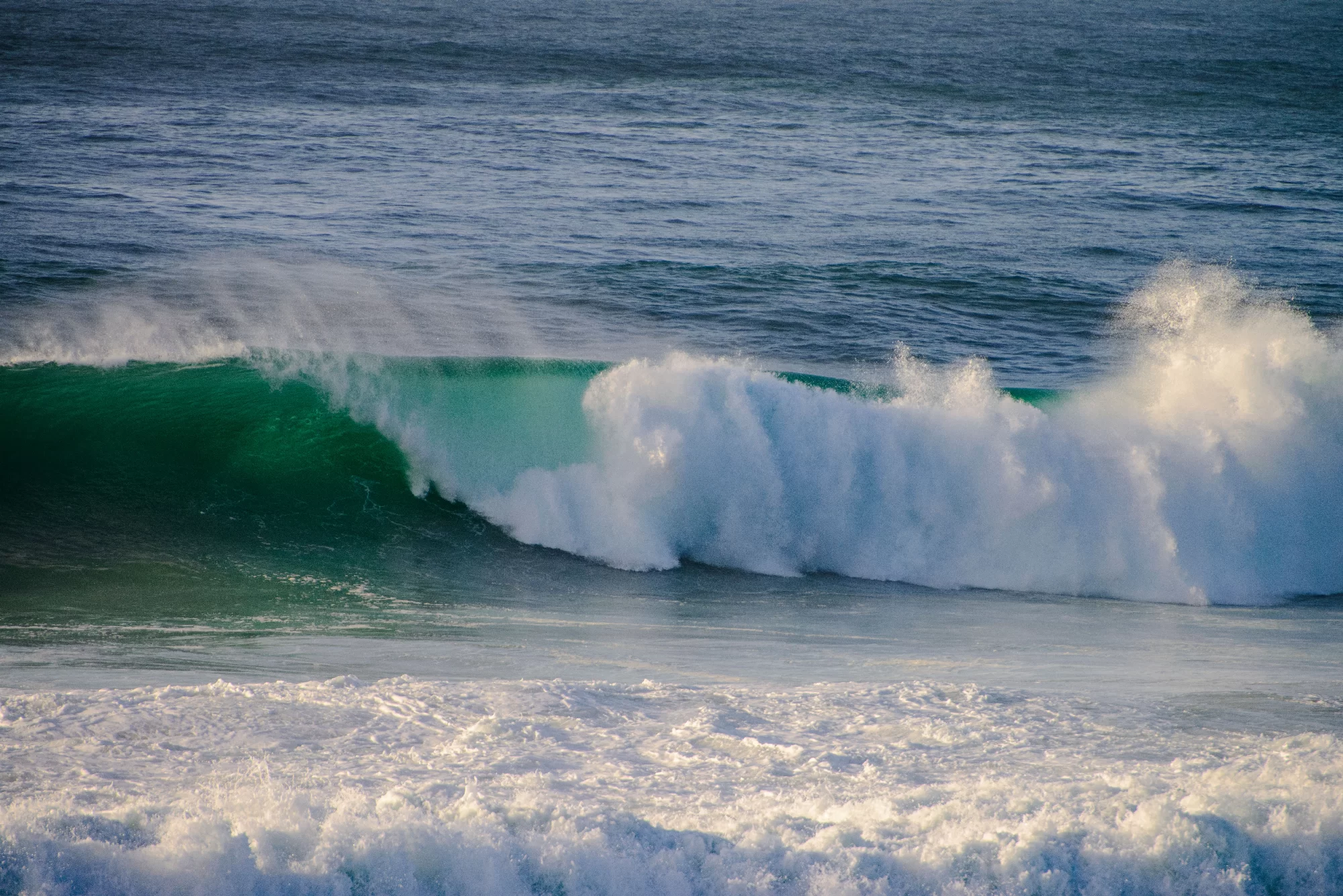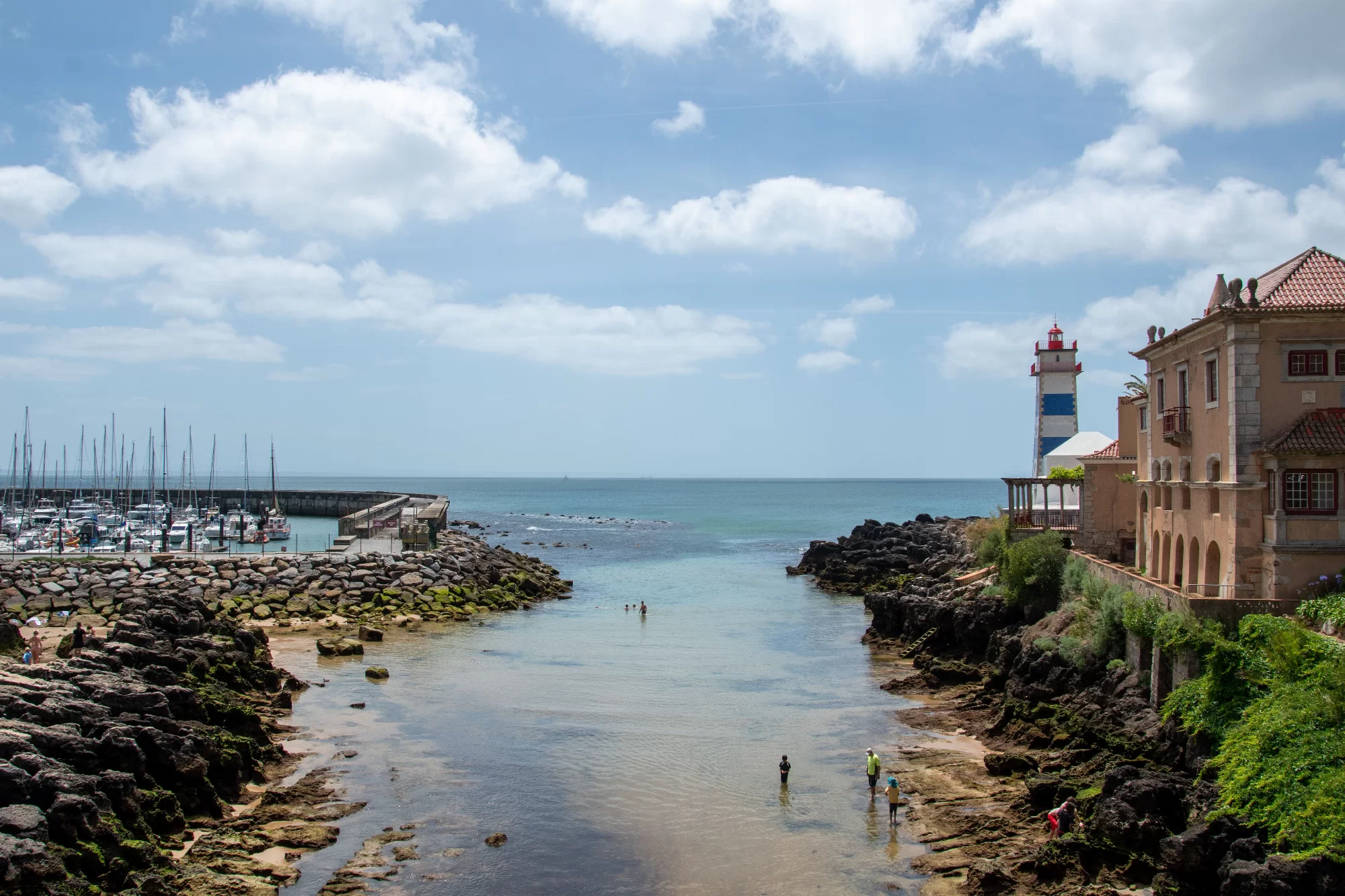
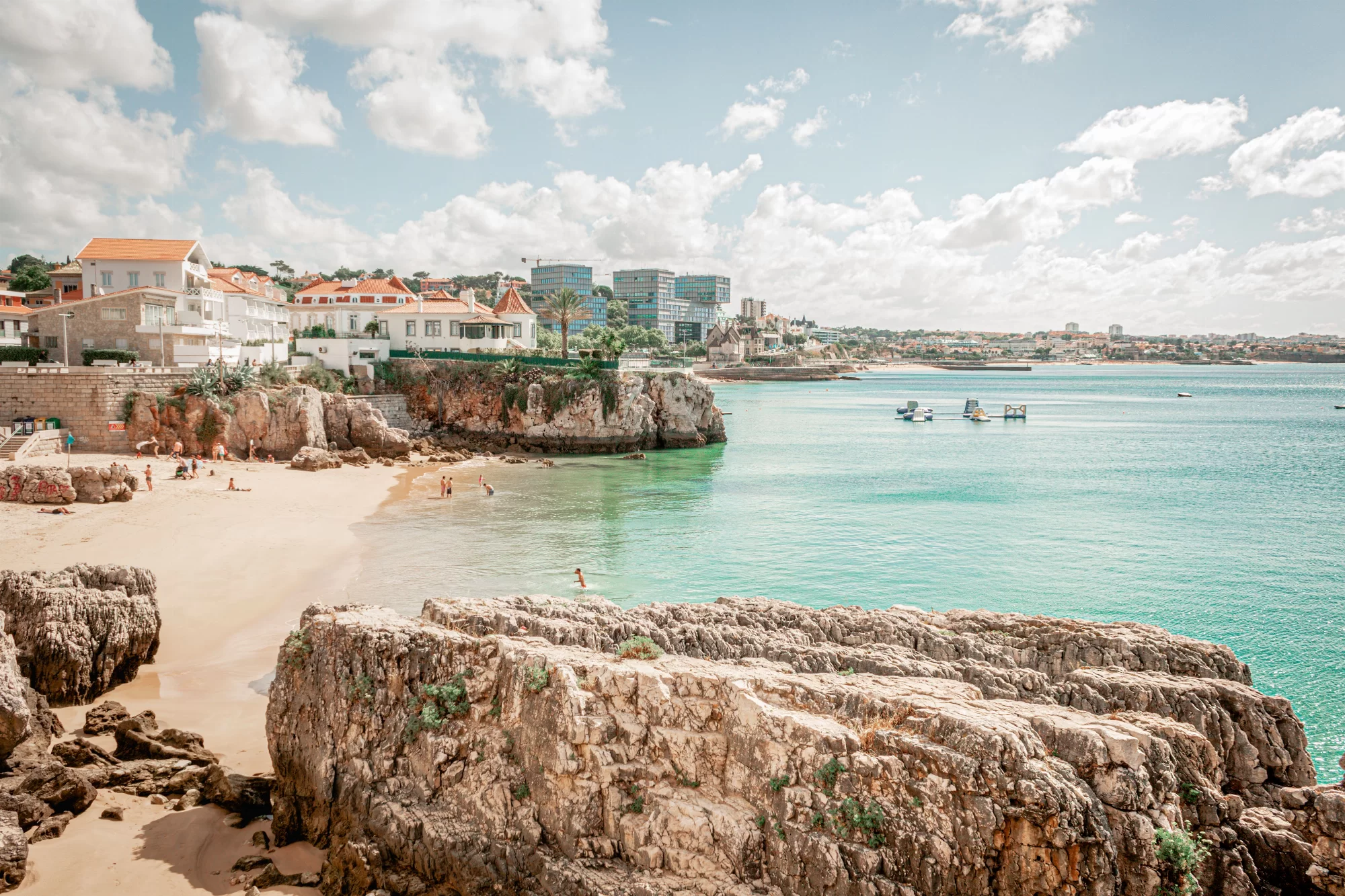
By lunchtime, the breeze at Guincho can turn a quiet morning into a moving scene of kites, white water and sand skimming across the beach. This exposed stretch of Cascais coastline is famous for surf and wind, yet you do not need to carry a board to enjoy it. Here is what to expect from Guincho Beach surfing, kitesurfing, the protected dunes and the quieter activities that make the trip worthwhile.
Why Guincho feels different from other Cascais beaches
Guincho faces the open Atlantic, with none of the sheltered character found at the small beaches around central Cascais. The beach is broad, the horizon feels enormous and the weather can be dramatically different from conditions in town. A calm breakfast near Cascais Bay does not guarantee a still afternoon at Guincho.
That exposure is the source of the beach’s appeal. Atlantic swell creates surf, while regular coastal wind supports wind-powered sports. The same conditions can make ordinary sunbathing less comfortable, particularly when loose sand starts blowing. Bring a layer even on a bright day, secure light belongings and do not assume a small parasol will remain upright. Guincho is best approached as a wild coastal outing rather than a guaranteed day of lying motionless in the sun.
Guincho is not the beach to choose because you want perfect calm; choose it because you want to feel the Atlantic at full volume.
What to know about Guincho Beach surfing
Guincho Beach surfing can be excellent, but the conditions demand respect. Waves, currents and wind change with the swell, tide and weather. Experienced surfers value that variety. Beginners should use a local surf school rather than renting a board and guessing where to paddle out. An instructor can choose an appropriate part of the beach, explain the currents and decide whether conditions suit a first lesson at all.
Morning sessions are often the more sensible choice because the wind may strengthen later, although no daily pattern is guaranteed. If you are booking a lesson, keep some flexibility in your plans and ask the school how the forecast affects the session. A reputable operator will prioritise a suitable sea state over forcing everyone into the water.
Most of what's covered here is easiest to reach by bike. We're right at the train station whenever you're ready to grab one.
Rent a Bike →Swimming requires the same caution. Use the supervised area when lifeguards are present, follow the flags and stay well clear of surf lessons and fast-moving boards. Outside the main bathing season, supervision may be reduced or absent. Watching from shore is often the right decision when the water looks rough; Guincho’s beauty does not make its currents gentle.
Is Guincho kitesurfing suitable for beginners?
Guincho kitesurfing is spectacular to watch. Colourful kites rise above the northern end of the beach, riders accelerate across the water and experienced athletes use the waves as ramps. The combination of strong wind, shore break and other beach users, however, makes independent experimentation a bad idea.
Beginners need professional instruction and controlled conditions. Kites generate considerable power, and safe handling begins on land before anyone enters the sea. Launch areas, permitted zones and access arrangements can also change according to the season and beach management, so confirm the current rules with a qualified local school. Intermediate riders unfamiliar with Guincho should seek local advice about wind direction, currents and the safest place to set up.
If this has you itching to get moving, our bikes are ready to go right at Cascais Train Station — no need to book far ahead outside peak summer.
Browse Bike Rental →- Choose instruction over casual equipment hire: Guincho can be demanding, even if you have tried kitesurfing once elsewhere.
- Keep clear of rigging and launching areas: lines are difficult to see and can stretch a long way across the sand.
- Expect plans to change: too little wind, excessive wind or unsuitable surf may delay a lesson.
- Pack for the beach after the session: dry clothes and a windproof layer are more useful here than an elaborate picnic setup.
What else can you do at Guincho Beach?
One of the best Guincho Beach activities costs nothing: walk the firm sand near the water and watch the surfers from a safe distance. The scale of the beach makes even a short walk satisfying, especially outside the busiest summer period. Photographers should protect cameras from blown sand and avoid changing lenses on the open beach. Late-day light can be beautiful, but cloud and sea mist sometimes soften the sunset rather than producing a fiery sky.
Behind the beach, the Guincho-Cresmina dune system shows why visitors should stick to marked paths and boardwalks. Dunes may look empty, but vegetation holds the sand in place and repeated footsteps cause real damage. The Duna da Cresmina interpretation centre and its surrounding walkways offer a closer look at this coastal environment without trampling it. Conditions remain exposed there, so a hat that fastens securely is more practical than one chosen only for photographs.
A simple beach lunch also works well, provided you plan around the wind. Use a sheltered spot where access is allowed, keep food packed until needed and take every piece of rubbish away. There are places to eat around the Guincho area, but opening patterns and availability vary during the year. If a restaurant meal matters to your day, check ahead rather than assuming there will be an immediate table.
Finish the outing with a bike ride from Cascais
Cycling is the most enjoyable way to connect central Cascais with Guincho because the journey becomes part of the visit. From Cascais Train Station, rent a suitable bike and head towards the coast, following the seafront out past Boca do Inferno and onward beside the Atlantic. Much of the later route uses the coastal cycle track, with open views that gradually become wilder as the town gives way to dunes and low vegetation.
Renting a bike here takes about two minutes at the counter, and it's usually the fastest way to actually do what's described above.
Book a Bike →The ride is manageable for many occasional cyclists, but Guincho’s wind changes the effort. A headwind can make the outward or return leg noticeably harder, and exposed sections offer little shelter. An e-bike is a smart choice for less confident riders, families carrying extra weight or anyone who wants energy left for the beach. Tomorrow’s Adventure at Cascais Train Station can help match the bike to the rider before departure.
Carry water, use sun protection and lock the bike only at an appropriate fixed point without blocking paths or dune access. Leave enough daylight for the return and put on a light layer before riding back if the temperature drops. Guincho earns its reputation through surfing and kitesurfing, but its real appeal is broader: a powerful coastline, living dunes and a bike ride that lets you experience the gradual shift from Cascais streets to open Atlantic shore.