A fish priced at €24 may look reasonable until you discover that the figure is per kilogram, not per portion. This Cascais seafood guide explains the menu terms that cause confusion, the dishes Portugal does particularly well, how to recognise a restaurant that takes fish seriously and where to eat around Cascais, from the old town to the Atlantic road towards Guincho.
A Cascais seafood guide starts with the blackboard
The printed menu tells only half the story in many Portuguese seafood restaurants. The more interesting half is often on a blackboard, handwritten card or chilled display near the entrance. That is where you may find the day’s fish, listed by species and priced either by portion or by weight. If the server points towards a whole fish, ask how much it weighs before agreeing to it. A large turbot can feed several people and cost far more than a single plate of grilled sea bass.
Freshness matters, but do not get trapped by the idea that every good restaurant must serve fish caught that morning. Atlantic weather, fishing restrictions and seasonality all affect supply. A professional answer such as “the sardines are not good this week, but the sea bream is” is more reassuring than a claim that everything arrived fresh today. A compact selection that changes is usually a better sign than an enormous menu offering every shellfish and fish species throughout the year.
The smartest seafood order is often not the dish you planned, but the local fish the kitchen can name, weigh and price clearly.
What the Portuguese fish names mean
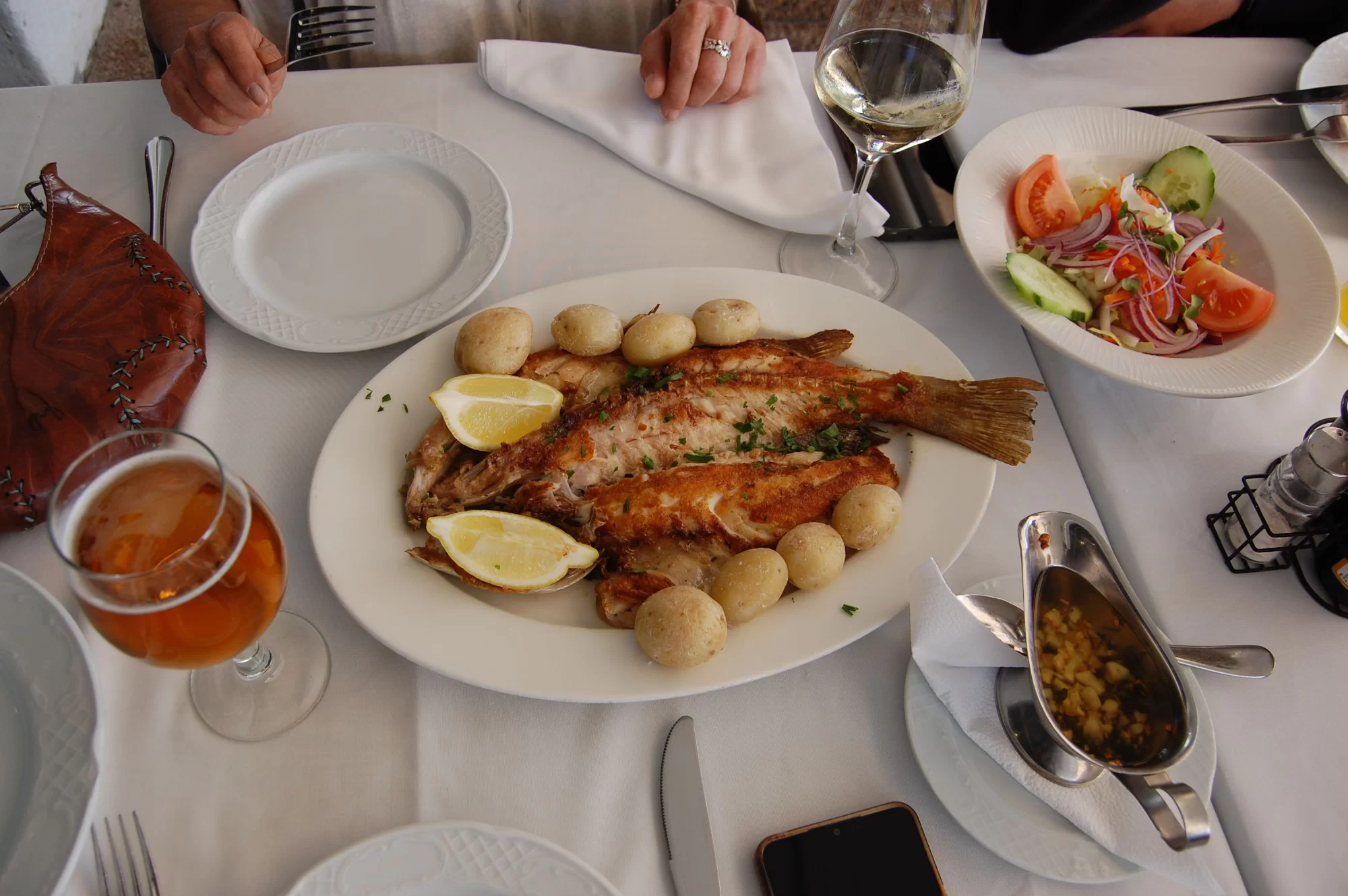
If you are wondering what to order in Portugal, begin with peixe grelhado: fish grilled over charcoal or a very hot grill, commonly served with boiled potatoes, vegetables or salad. It is simple on purpose. Good fish needs little more than salt, olive oil and perhaps lemon. Ask what is best for one person because some species are normally sold whole and are better shared.
- Robalo is sea bass, usually mild, firm and easy to eat. It is a dependable first choice for anyone who does not want an intensely fishy flavour.
- Dourada is gilt-head sea bream. It is another common grilled option, with moist white flesh and a little more character than sea bass.
- Sardinhas are sardines. They are at their best during the warmer part of the year and are normally grilled whole. Expect bones, crisp skin and a strong aroma.
- Carapau means horse mackerel. It is an inexpensive, flavourful local fish that deserves more attention than it receives from visitors.
- Linguado is sole, while pregado is turbot. Both can be excellent, but they are often among the more expensive fish, particularly when sold by weight.
- Polvo is octopus. Polvo à lagareiro usually arrives roasted with generous olive oil, garlic and crushed potatoes.
- Choco is cuttlefish and lulas are squid. Both may be grilled, fried or cooked in their own ink, depending on the restaurant.
For something more substantial, arroz de marisco is a loose, brothy shellfish rice rather than a dry rice dish. It is commonly prepared for two people, though serving rules vary. Cataplana de marisco is shellfish cooked in a hinged copper-coloured pan with an aromatic sauce, while caldeirada is a rustic fish stew built around several species, potatoes, onions and tomatoes. These mixed dishes are good for groups, but they are not always the best way to assess the quality of one particular fish. For that, order it grilled.
Shellfish requires a little more menu confidence
Cascais menus may list shellfish under marisco. Amêijoas à Bulhão Pato are clams cooked with garlic, olive oil, coriander and usually white wine or lemon. The sauce demands bread. Camarão means prawns or shrimp, while lagostins are closer to langoustines. Sapateira is brown crab and may be served cold, with the shell filled with a seasoned mixture intended for spreading on toast.
A private tour covers this route without you having to think about logistics — just show up and go.
Book a Tour →Percebes, or goose barnacles, look like tiny dinosaur feet and taste intensely of the Atlantic. They are harvested from wave-battered rocks, so they can be costly and their availability changes. Twist the outer casing carefully and be prepared for a squirt of salty water. They are fascinating to try once, but I would choose good clams or grilled fish first if this is your only seafood meal in Cascais.
Shellfish is frequently priced by weight. Look for kg, 100 g or wording such as preço por quilo. Ask the server to estimate the total before the kitchen cooks it. The same applies to a seafood platter: find out exactly what it contains, whether the shellfish is served hot or cold and how many people it realistically feeds. A platter piled with ice can look dramatic while offering less food than expected.
How to avoid surprises when ordering
The small plate of bread, butter, cheese, olives or fish spread placed on the table is the couvert. It is not necessarily complimentary. If you do not want it, leave it untouched and ask for it to be removed. Couvert is normal Portuguese restaurant practice, not evidence of a tourist trap, but the items and prices should be shown on the menu.
Before ordering a whole fish, establish whether the displayed price is per kilogram and ask to hear its approximate weight. For mixed rice, stew or cataplana, check whether the quoted price is per person and whether there is a minimum of two. The Portuguese word dose means a serving, but serving sizes are not standard. A full dose may be large enough to share; a meia dose, or half portion, may be available even when the English menu does not make that obvious.
This is one of the routes our driver-guides know particularly well, if you'd rather sit back and let someone else handle the day.
Explore Tours →A good server should be able to explain the difference between farmed and wild fish, recommend a species for your group size and tell you whether bones will be removed. Be wary if every suggestion happens to be the most expensive item, the pricing remains vague after you ask, or a fish is taken to the kitchen before you have agreed on its weight. Clear questions are not rude. They are how regular customers order too.
Where to eat seafood around Cascais
The best seafood restaurants in Cascais are not all concentrated in one street, and the right location depends on the meal you want. Around the historic centre and the streets behind the bay, you will find traditional dining rooms, modern Portuguese restaurants and casual places suited to grilled fish, octopus or clams. This is the easiest area for lunch without planning: arrive by train, walk for a few minutes and compare the daily boards before sitting down. Mercado da Vila is also useful for seeing local produce and finding informal food options, although it should not be treated as a substitute for a dedicated fish restaurant if you want a long, traditional meal.
West of the centre, the coast near Boca do Inferno and Casa da Guia has restaurants with open Atlantic views. Mar do Inferno is one of the best-known seafood names in this area, while Casa da Guia combines several places in a cliff-top setting. You are paying partly for location, so judge the menu and pricing on their own merits rather than assuming an ocean view guarantees better fish. These areas are easy to reach by bicycle from Cascais Train Station, making a seafood lunch a natural stop on a coastal ride. Use a proper lock, avoid a heavy meal before tackling strong headwinds and do not mix significant alcohol with the return journey.
Farther west, the road towards Guincho has established fish and shellfish restaurants, including Furnas do Guincho, in a wilder setting away from the town centre. Cycling there is rewarding for confident riders, but wind can turn the return into hard work and the road requires attention. A taxi or transfer is the better option after dark, in bad weather, for diners with limited mobility or for a group planning a long meal with wine. Back beside Cascais Bay, places such as Baía do Peixe offer a central alternative where the appeal is convenience and a broad seafood selection.
If you'd rather skip the parking and the timing altogether, this is exactly the kind of day our driver-guides run regularly.
See Private Tours →How to spot a good restaurant before sitting down
Ignore simplistic rules such as “never eat near the water” or “only choose places full of locals.” Cascais is a visitor town, and some excellent restaurants occupy prominent locations. Instead, look for specific evidence: visible prices, a daily catch that changes, staff who describe species confidently and a dining room with steady turnover. Fish in a display should look bright and well kept, without dry edges or cloudy eyes. A strong kitchen may have translated menus and polished service; neither automatically makes it touristy.
My preference is a restaurant that admits when a species is unavailable and recommends something comparable at a similar price. I would also choose one excellent shared fish with clams to start over an oversized platter containing a little of everything. It gives the grill nowhere to hide, costs are easier to understand and the meal feels more Portuguese than ordering by photograph.
Cascais rewards diners who stay flexible. Read the board, ask what is in good condition that day and confirm any price based on weight. Then choose the setting to match the occasion: the centre for convenience, the western coast for views or Guincho for a destination meal. The memorable plate is rarely the one with the longest description. More often, it is a properly grilled fish, a few boiled potatoes and the taste of the Atlantic still in every bite.