By 11am, the approaches to Sintra’s headline monuments can feel like a procession. Repeat visitors — and anyone who would rather hear birds than tour-group commentary — should turn instead to Monserrate, Palácio de Seteais and the Convento dos Capuchos. This guide explains what makes these three under-visited Sintra sites special, how long to allow and why an e-bike is often the most satisfying way to connect them.
Why these quieter Sintra sites deserve your time
The phrase hidden Sintra palaces needs a little qualification. Monserrate is hardly a secret, Seteais now operates as a hotel, and Capuchos is a convent rather than a palace. Yet all three sit outside the standard rush between Pena Palace and Quinta da Regaleira. They show very different sides of Sintra: exuberant Romantic architecture, aristocratic elegance and severe religious simplicity.
Do not try to squeeze all three into the spare hour left after a packed morning. Monserrate’s gardens alone reward an unhurried visit, while Capuchos makes sense only if you take time to notice its tiny cells, cork-lined surfaces and relationship with the forest. A full day works well. With less time, combine Seteais and Monserrate, leaving Capuchos for a separate excursion into the Serra de Sintra.
Sintra becomes more interesting when you stop treating it as a race between palace entrances.
Monserrate is the best alternative to Sintra’s busiest palaces
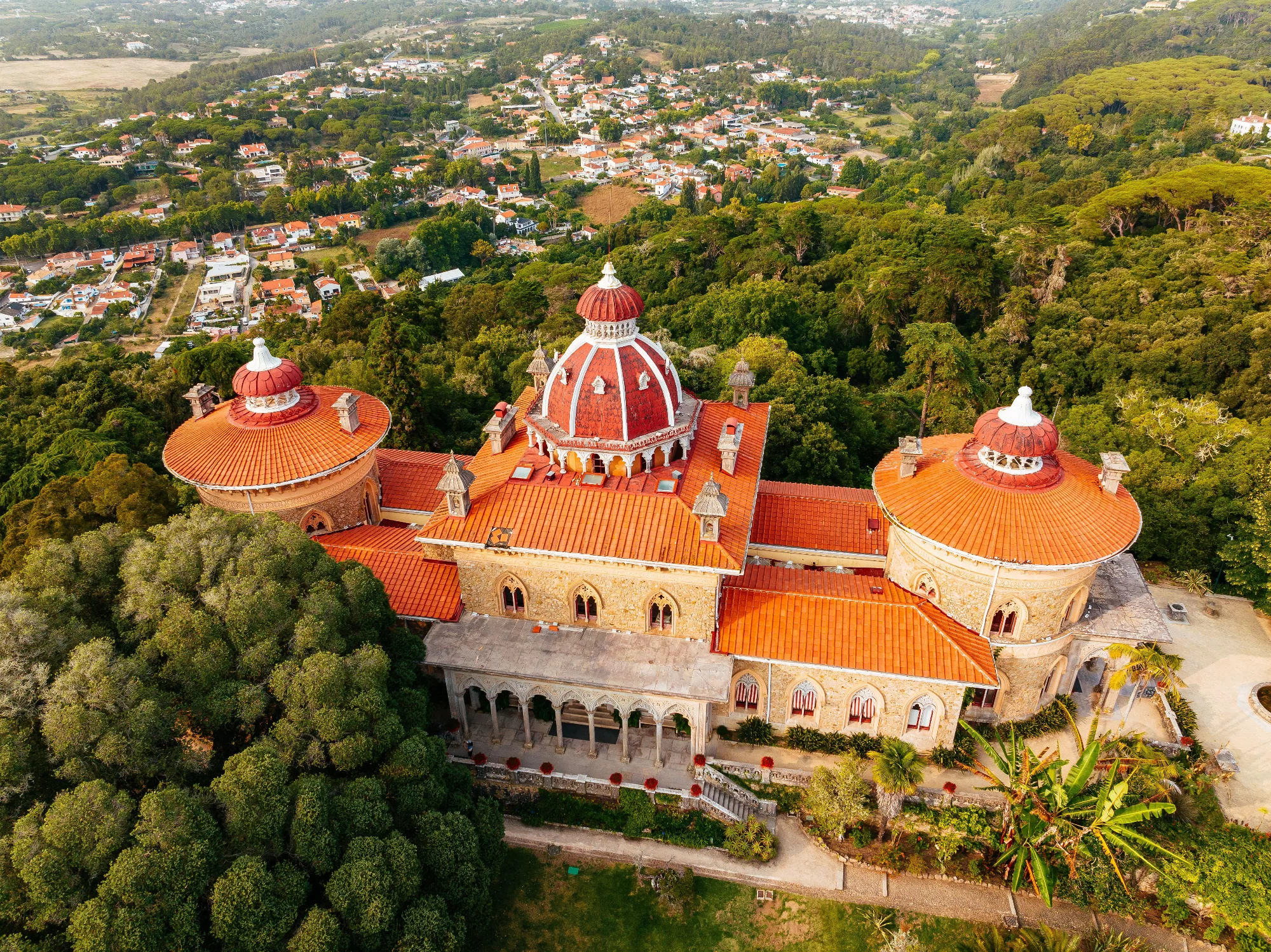
If you visit only one place on this list, make it the Palace of Monserrate. The building combines Gothic, Moorish and Indian-inspired details without feeling like a collection of borrowed decorations. Its long central gallery, delicate plasterwork and domed spaces have an almost weightless quality. Compared with Pena, the pleasure here comes less from grand state rooms and more from looking closely at arches, columns and patterns.
Any useful Monserrate Palace guide should give equal attention to the park. The estate’s sheltered slopes support plants from different climates, arranged into areas that feel distinct rather than randomly exotic. Paths pass through fern-filled valleys, lawns, water features and the remarkable Mexico Garden. Some routes are steep, so comfortable shoes matter even if you have cycled to the entrance. Allow at least two hours; keen gardeners can easily spend longer.
A private tour covers this route without you having to think about logistics — just show up and go.
Book a Tour →Monserrate is calmer than Sintra’s biggest attractions, not empty. Arriving near opening time generally gives you a quieter palace interior and cooler conditions for the garden climbs. Later in the day can also be pleasant once organised day trips begin moving back towards the historic centre. Check current admission details before setting out, as access arrangements and restoration work can change.
Palácio de Seteais offers elegance without a formal visit
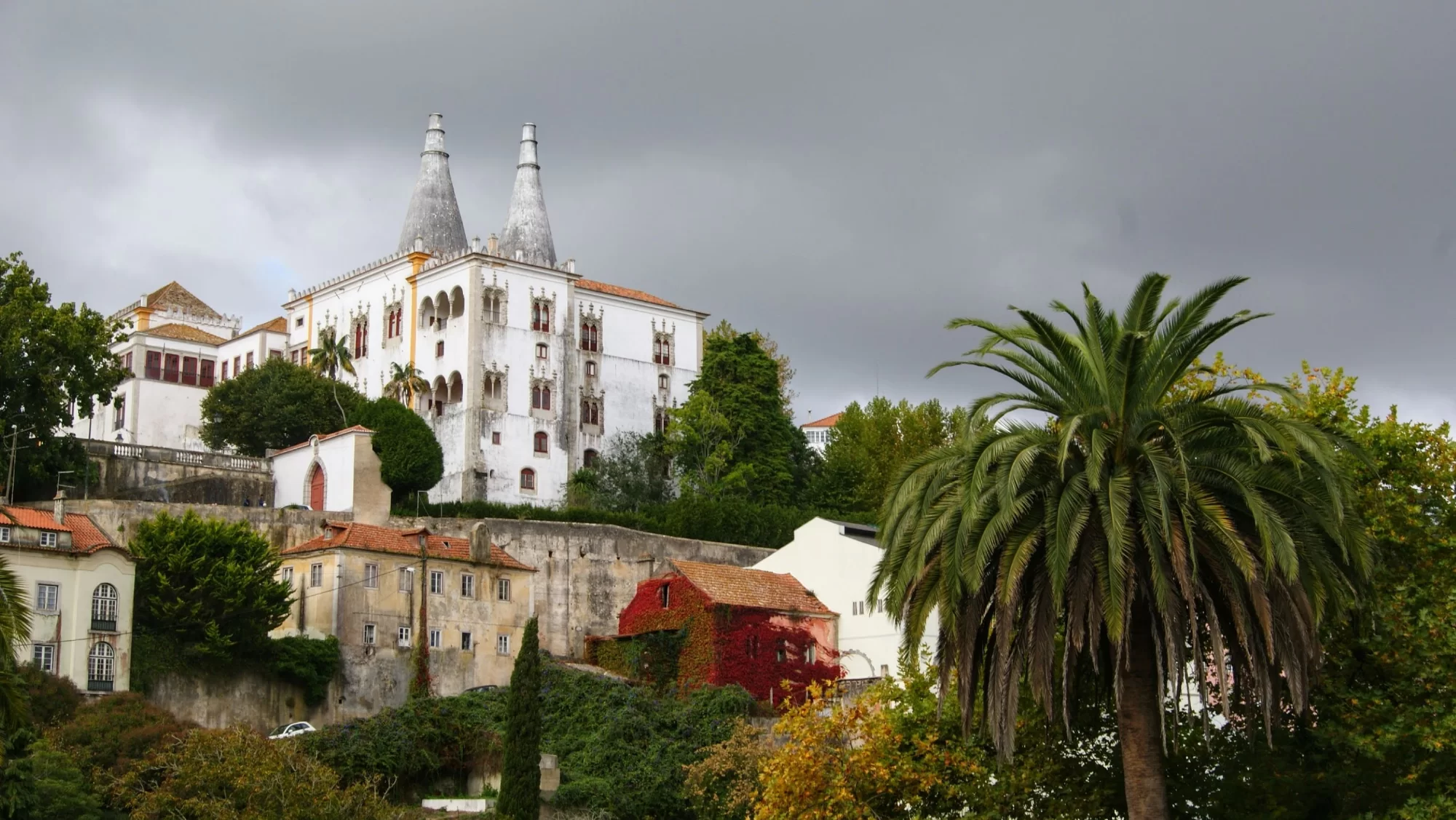
Palácio de Seteais feels different because it is not run as a conventional monument. The neoclassical palace is now a luxury hotel, so you should not expect to wander freely through private rooms. What you can appreciate is the composition of the estate: its pale façades, formal approach, gardens and monumental arch, set against the wooded Sintra hills.
This is a good stop for travellers interested in architecture but tired of ticket queues. Approach quietly, remember that it is a working hotel, and ask staff before entering spaces that are not clearly public. A meal or drink may provide a legitimate reason to experience part of the interior, but availability and access depend on hotel operations. Even a short exterior visit reveals a more restrained aristocratic Sintra than the theatrical Romantic buildings nearby.
Seteais is close enough to Sintra’s historic centre to include at the beginning or end of a walking day. It also pairs naturally with Monserrate because both lie west of the centre. The contrast is the point: Seteais is symmetrical and composed, while Monserrate seems designed to dissolve into its gardens.
This is one of the routes our driver-guides know particularly well, if you'd rather sit back and let someone else handle the day.
Explore Tours →The Convento dos Capuchos strips Sintra back to stone and cork
The Convento dos Capuchos is the strongest choice for visitors seeking Sintra off the beaten path. Franciscan friars lived here in deliberately austere conditions, using cork to insulate doors, ceilings and tiny sleeping cells. Low entrances force taller visitors to bow, while rough stone passages merge with boulders and vegetation. After Sintra’s ornate palaces, the restraint can be startling.
This is not an easy site for everyone. Surfaces are uneven, rooms are confined and the woodland setting can remain damp underfoot. Visitors with reduced mobility should investigate current access conditions before travelling. Bring a light layer outside summer, move carefully through the narrow interiors and resist rushing from room to room. Much of the convent’s atmosphere comes from its silence and human scale.
Capuchos is also the most isolated of the three places. That is part of its appeal, but it requires more planning than Seteais or Monserrate. Confirm opening and ticket information on the day, especially outside the busiest season, rather than relying on an old itinerary or travel blog.
How to connect the three sites without wasting the day
Cycling gives you independence from fixed schedules and lets you experience the changing forest between monuments. Sintra, however, is not a casual flat ride. Roads climb sharply, bends can be blind and traffic may be impatient. For most visitors, an e-bike is the sensible choice. A standard bike suits fit riders who are comfortable with sustained hills; anyone riding to Sintra from Cascais should treat that as a substantial journey rather than a gentle sightseeing loop.
If you'd rather skip the parking and the timing altogether, this is exactly the kind of day our driver-guides run regularly.
See Private Tours →Start with Seteais, continue towards Monserrate and tackle Capuchos only if your battery, legs and daylight leave a generous margin. Carry a lock, lights, water and a charged phone. Formal cycle parking is not guaranteed at every entrance, so follow staff directions and never block gates or historic structures. Descents demand as much care as climbs, particularly where leaves, moisture or loose gravel reduce grip.
- Best for a half-day: Seteais and Monserrate, with most of the time reserved for Monserrate’s palace and park.
- Best for solitude: Capuchos early in the day, followed by Monserrate if energy and transport allow.
- Best for less confident cyclists: use an e-bike for the lower stops and arrange a taxi or private transfer for Capuchos.
- Best for poor mobility or very young children: choose transport between sites and check each monument’s current accessibility before departure.
A guided tour is useful if you want architectural context or do not want to navigate the mountain roads. A private transfer is the better fallback for bad weather, limited mobility or a group carrying children’s equipment. Still, in good conditions, cycling offers the richer day: you notice the scents, gradients and sudden views that disappear through a car window. These quieter retreats are not substitutes for Sintra’s famous palaces. They are where the town’s contrasts become clearer — and where a second visit often becomes better than the first.