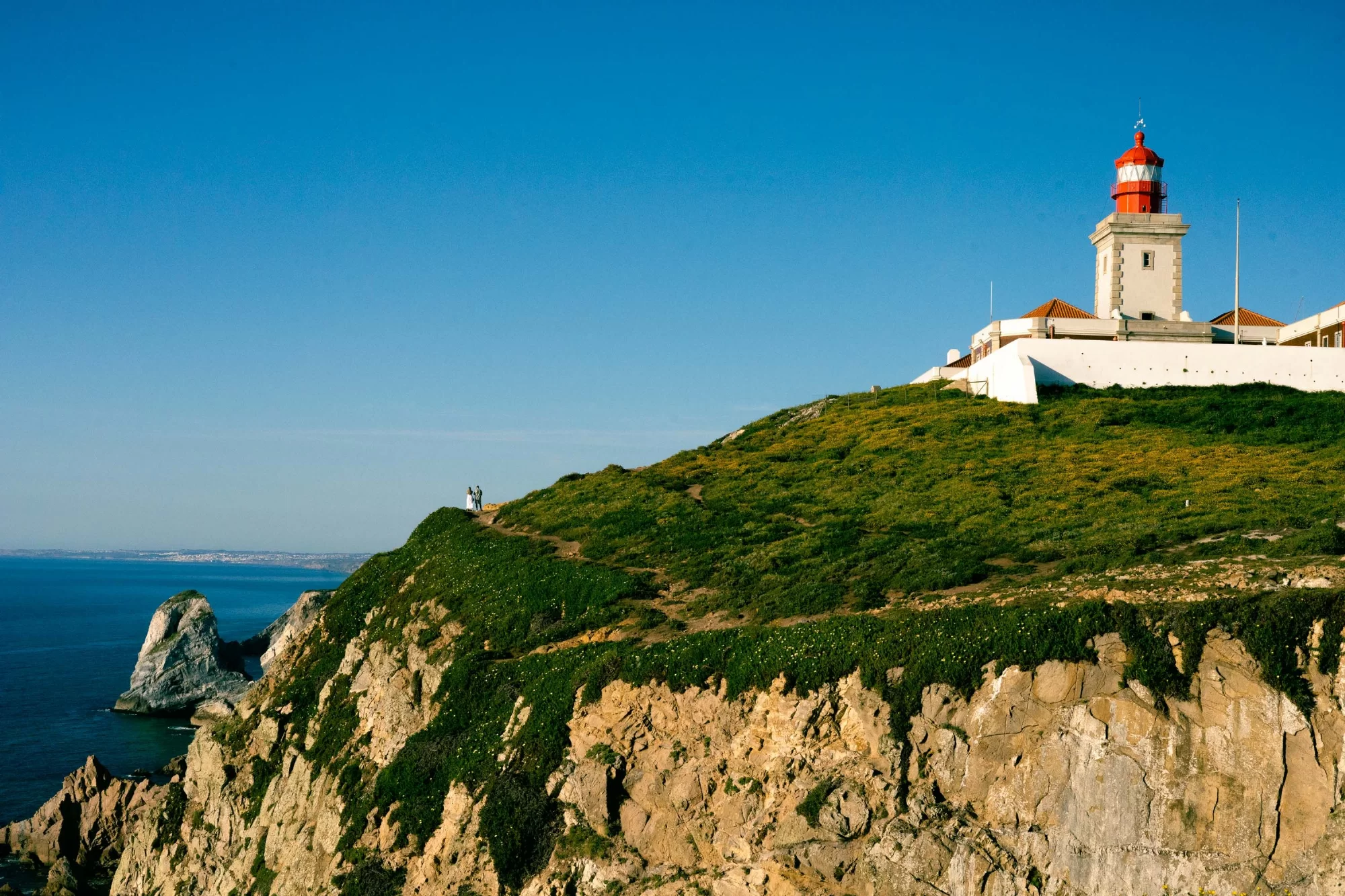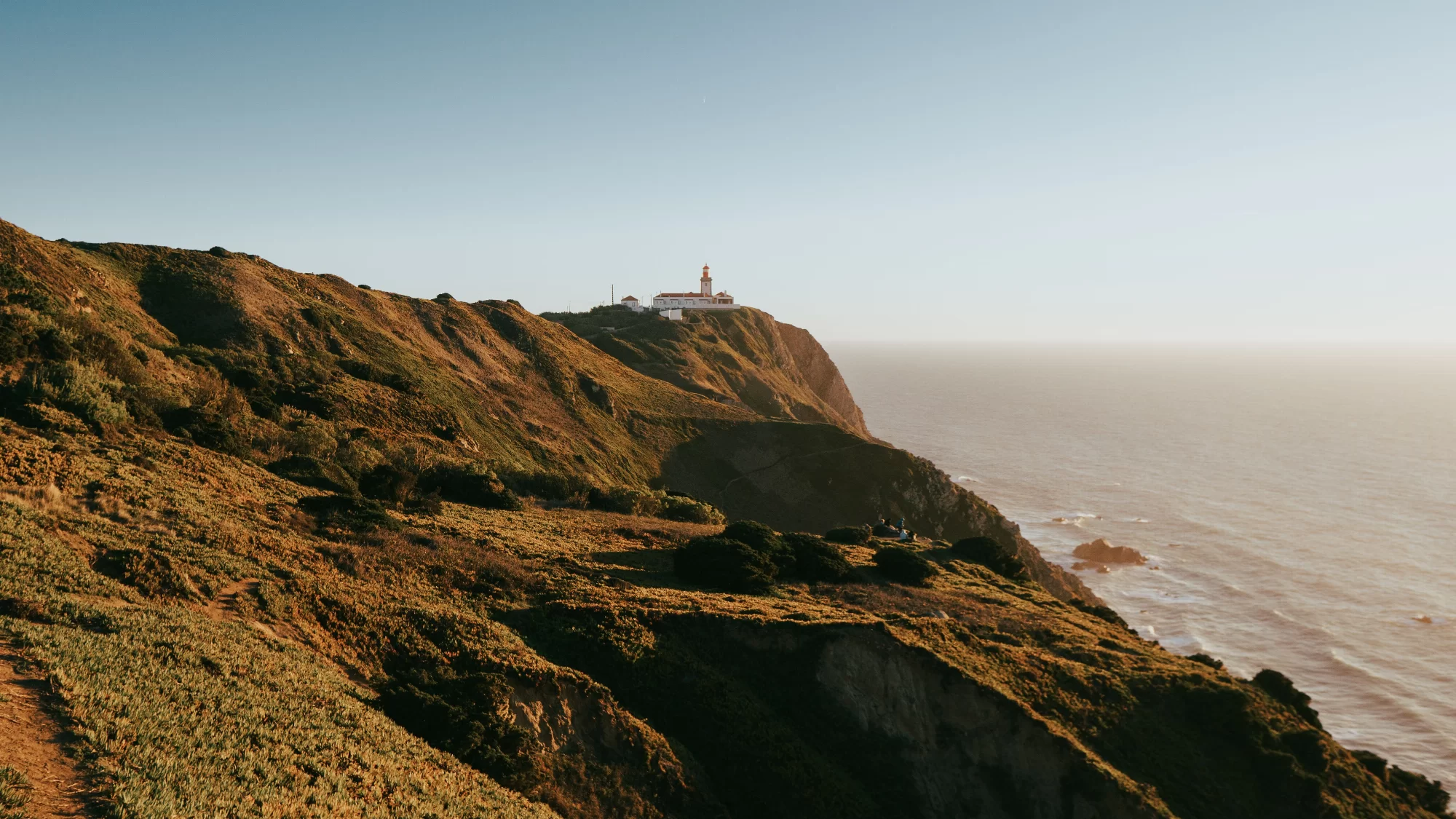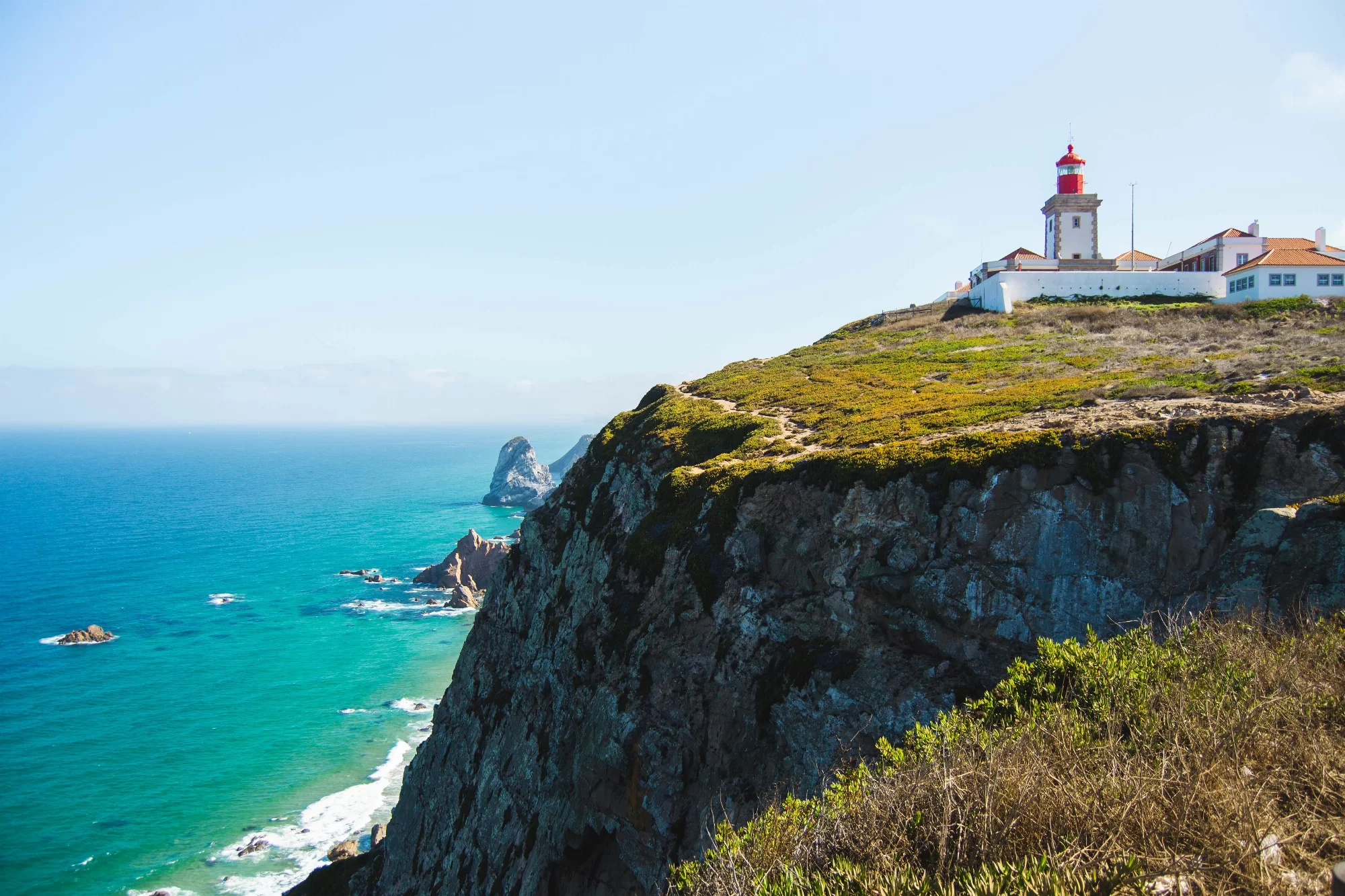
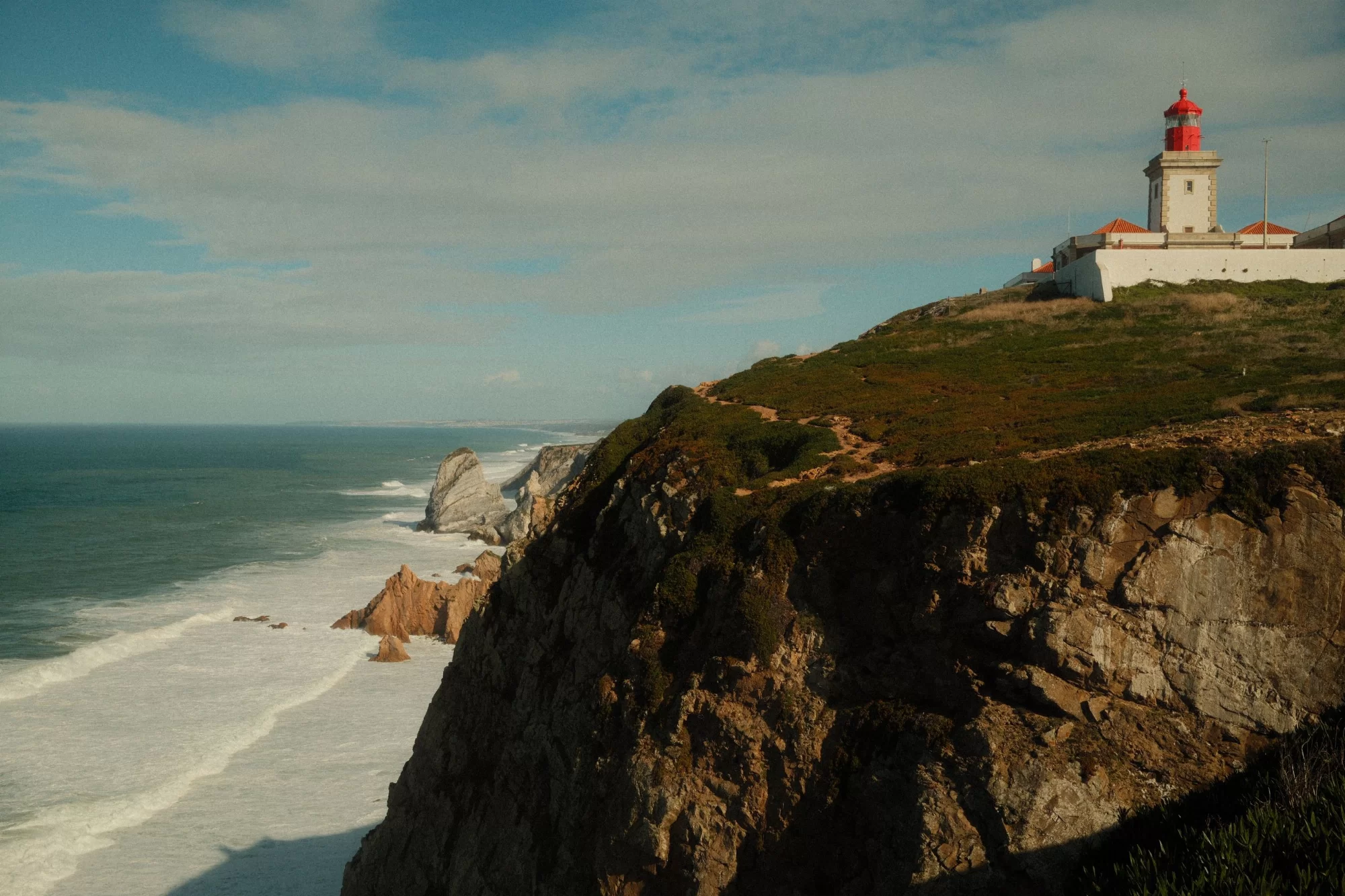
A wide-angle lens can make Cabo da Roca’s cliffs look deceptively accessible. They are not. This guide explains how to photograph the lighthouse landscape, Atlantic horizon and changing weather from safe, permitted positions, with practical advice on light, wind, equipment and sunset composition. The central rule is simple: no photograph justifies crossing a barrier or stepping onto uncertain cliff ground.
How to approach Cabo da Roca photography safely
Begin by walking through the public viewing area without taking a picture. Notice the marked paths, barriers, warning signs and places where other visitors may suddenly enter your frame. Conditions and access arrangements can change, so instructions on site take priority over an old photograph, map or social-media post.
Stay well back from cliff edges even where no barrier appears. Coastal soil can be undercut, cracked or hidden beneath vegetation, and strong gusts can affect balance without warning. Keep tripod legs entirely within designated areas and never climb over fencing to remove people from a composition.
No cliff-edge photograph is impressive enough to justify standing on ground you cannot properly inspect.
Choose light rather than chasing a perfect forecast
Clear skies are not automatically best for Cabo da Roca photography. Flat blue light can drain texture from the cliffs, while broken cloud creates moving patches of brightness across the Atlantic. Early or late light usually gives the lighthouse, vegetation and rock more shape, but overcast conditions can produce restrained, atmospheric images with excellent detail.
This is one of the routes our driver-guides know particularly well, if you'd rather sit back and let someone else handle the day.
Explore Tours →For photographing Cabo da Roca sunset, arrive early enough to choose a safe position before the light becomes dramatic. The lighthouse landscape may become strongly backlit as the sun lowers over the ocean. Expose for the brightest part of the sky, review the histogram, then make a second brighter frame if you want more foreground detail. Bracketing is safer than trying to recover everything while hurriedly changing settings beside a crowded viewpoint.
Prepare for wind, mist and salt spray
The weather can shift between sunshine, low cloud and wind-driven moisture surprisingly quickly. A light tripod may vibrate, while extending the centre column makes it less stable. Keep the camera strap secured, shorten the tripod, and add weight only if it cannot swing. In stronger gusts, handheld shooting with a faster shutter speed is often the sensible choice.
A compact kit is easier to control here:
If you'd rather skip the parking and the timing altogether, this is exactly the kind of day our driver-guides run regularly.
See Private Tours →- A wide or standard zoom for cliffs, lighthouse and ocean together
- A lens cloth kept in a dry pocket for mist and spray
- A hood to reduce droplets and side glare
- A protective layer for both camera and photographer
- A neutral-density filter only if conditions are calm enough for careful tripod work
If arriving by bicycle, carry camera equipment in a closed backpack rather than a loose handlebar bag, and stop completely before taking photographs. The exposed final approach can feel much harder in a headwind, so leave energy for the return and secure the bicycle only in an appropriate area.
Build stronger frames from the marked areas
The recognised Cabo da Roca photo spots already offer several useful layers. Use vegetation or rock as foreground, place the lighthouse away from the centre, and let the cliff line lead toward the Atlantic. A longer focal length can compress the lighthouse and coast, often producing a cleaner image than an ultra-wide lens filled with empty sky.
People can provide scale, but photograph them only from safe public ground and avoid directing anyone towards an edge. In fog, simplify: isolate the lighthouse, use muted colour, or frame waves disappearing into haze. Poor visibility is not failed weather; it is a different visual story.
A private tour covers this route without you having to think about logistics — just show up and go.
Book a Tour →Take the final sunset frames without rushing
After sunset, the brightest colour may linger near the horizon while the foreground darkens quickly. Make your last exposures from the same secure position rather than wandering in reduced visibility. Pack small items before moving, use a light on established paths, and do not fly a drone unless you have confirmed the current aviation, environmental and temporary local restrictions.
Tomorrow’s Adventure is based at Cascais Train Station. Our main work is bike rental and guided bike tours in Cascais, while private car tours and transfers from Cascais, Sintra, Oeiras and Lisbon offer a practical alternative for reaching Cabo da Roca with camera equipment or in difficult weather.