A painted cycle symbol does not always mean you have an uninterrupted bike lane. In Cascais, a ride can move from a marked cycling space to an ordinary road, a shared seafront section and a busy crossing within a few minutes. This guide explains the Portugal cycling rules tourists are most likely to encounter, including where to ride, how to approach junctions, what pedestrians expect and which equipment to check before leaving a rental shop.
In Portugal, a bicycle is treated as road traffic
The first principle clears up several common misunderstandings: once you ride on the road, you are operating a vehicle under the Portuguese Highway Code. Direction signs, traffic lights, stop signs and give-way markings apply to you too. Riding a bicycle does not create a middle category in which you can switch between vehicle and pedestrian rules whenever one seems more convenient.
That matters immediately around Cascais Train Station and the surrounding central streets, where traffic movements can be compact and unfamiliar. Ride in the same direction as other vehicles, stop at red lights and signal before changing direction. If a one-way street has an exception for bicycles, it should be indicated by local signs or markings; never assume that every one-way restriction allows cycling in both directions.
Drivers overtaking a bicycle are required to leave a safety margin under Portuguese law, but a legal requirement is not a physical shield. Hold a steady line and avoid sudden swerves towards the centre of the road. Likewise, do not squeeze along the inside of a turning bus, van or delivery vehicle. If you cannot see the driver’s mirror, there is a fair chance the driver cannot see you.
A predictable cyclist is easier to protect than a cyclist who is technically correct but impossible to read.
Where should you ride on Cascais roads?
Keep to the right-hand side of the carriageway unless a manoeuvre, obstruction or marked route requires something different. Keeping right does not mean scraping along the kerb. Drain covers, broken edges, sand and opening car doors can all force an abrupt movement, so leave yourself enough room to continue in a straight, visible line. On a rental bike, spend a minute testing the brakes and gears somewhere calm before entering traffic; learning which lever controls which brake halfway down a street is too late.
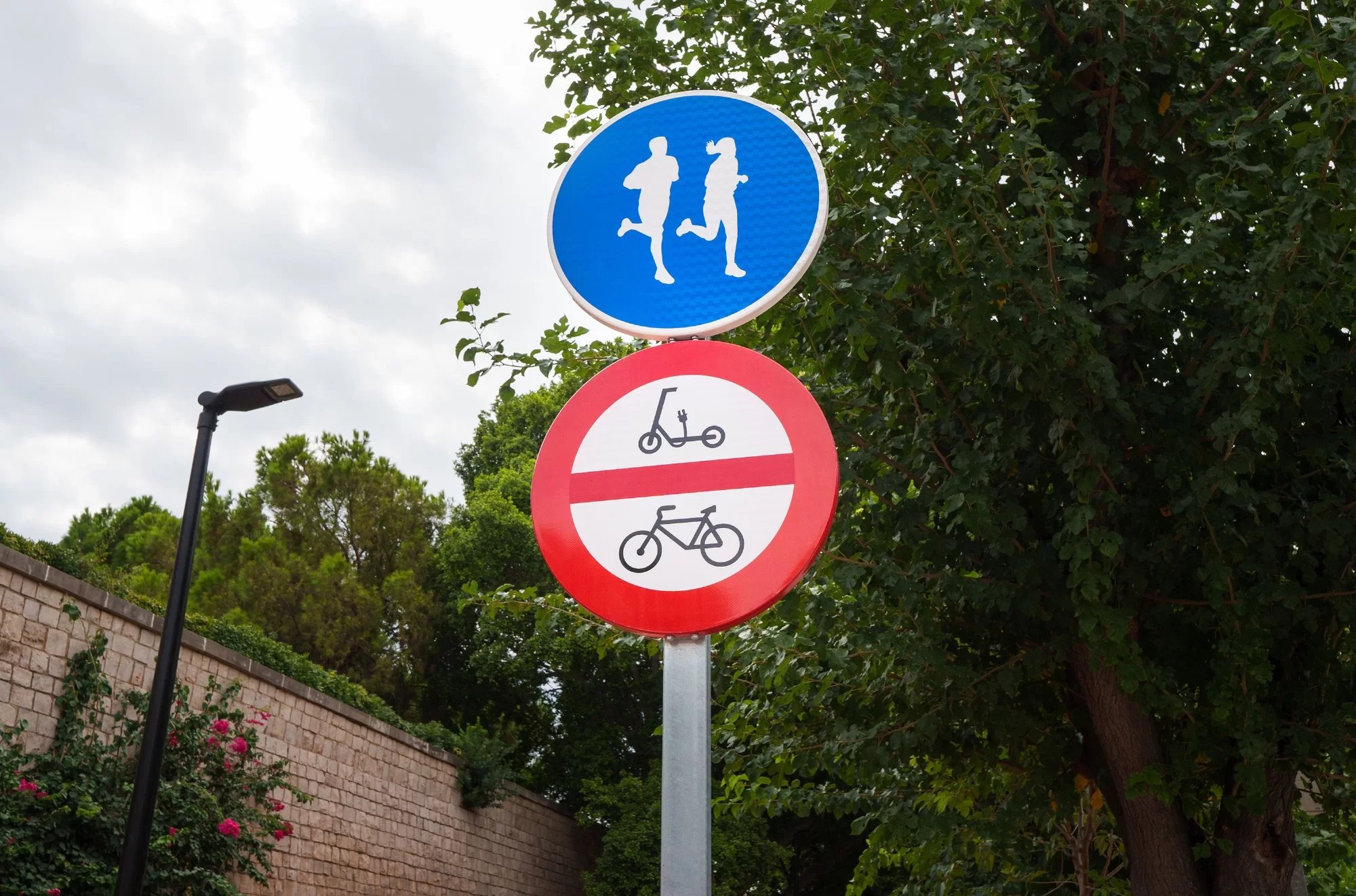
Use cycle infrastructure according to its signs and markings. Some sections around Cascais are clearly reserved for bicycles, while others are shared with people walking. Routes can also be interrupted by junctions, car-park entrances or short stretches where cyclists return to the road. Look ahead rather than following the painted line blindly. Temporary works and event barriers may change the usual arrangement.
Portuguese rules generally allow cyclists to travel two abreast in certain circumstances, but not where doing so creates danger, obstructs traffic or reduces visibility. Visitors should treat that as permission, not a target. Single file is the sensible choice on narrow streets, near bends and whenever vehicles are waiting to pass. Save side-by-side conversation for a genuinely open section where you can hear approaching traffic and move into line smoothly.
Most of what's covered here is easiest to reach by bike. We're right inside Cascais Train Station whenever you're ready to grab one.
Rent a Bike →Roundabouts deserve extra patience. Portuguese rules contain specific provisions for cyclists, and the safest lane choice may not feel intuitive to someone used to another country’s system. Slow down, make eye contact and signal clearly. Watch particularly for vehicles leaving across your path. If a roundabout is busy or its markings are confusing, get off before entering and use the pedestrian crossings as a person walking the bicycle. There is no prize for forcing a manoeuvre you do not understand.
Shared paths do not give bicycles priority everywhere
The coastal side of Cascais attracts walkers, runners, families and people stopping suddenly for a photograph. Even where cycling is permitted, a shared space is not a miniature road on which pedestrians are inconvenient obstacles. Reduce your speed early, leave a generous gap and use a bell before passing rather than calling out at the last second. A quiet warning from several metres away is usually better received than an aggressive ring directly behind someone.
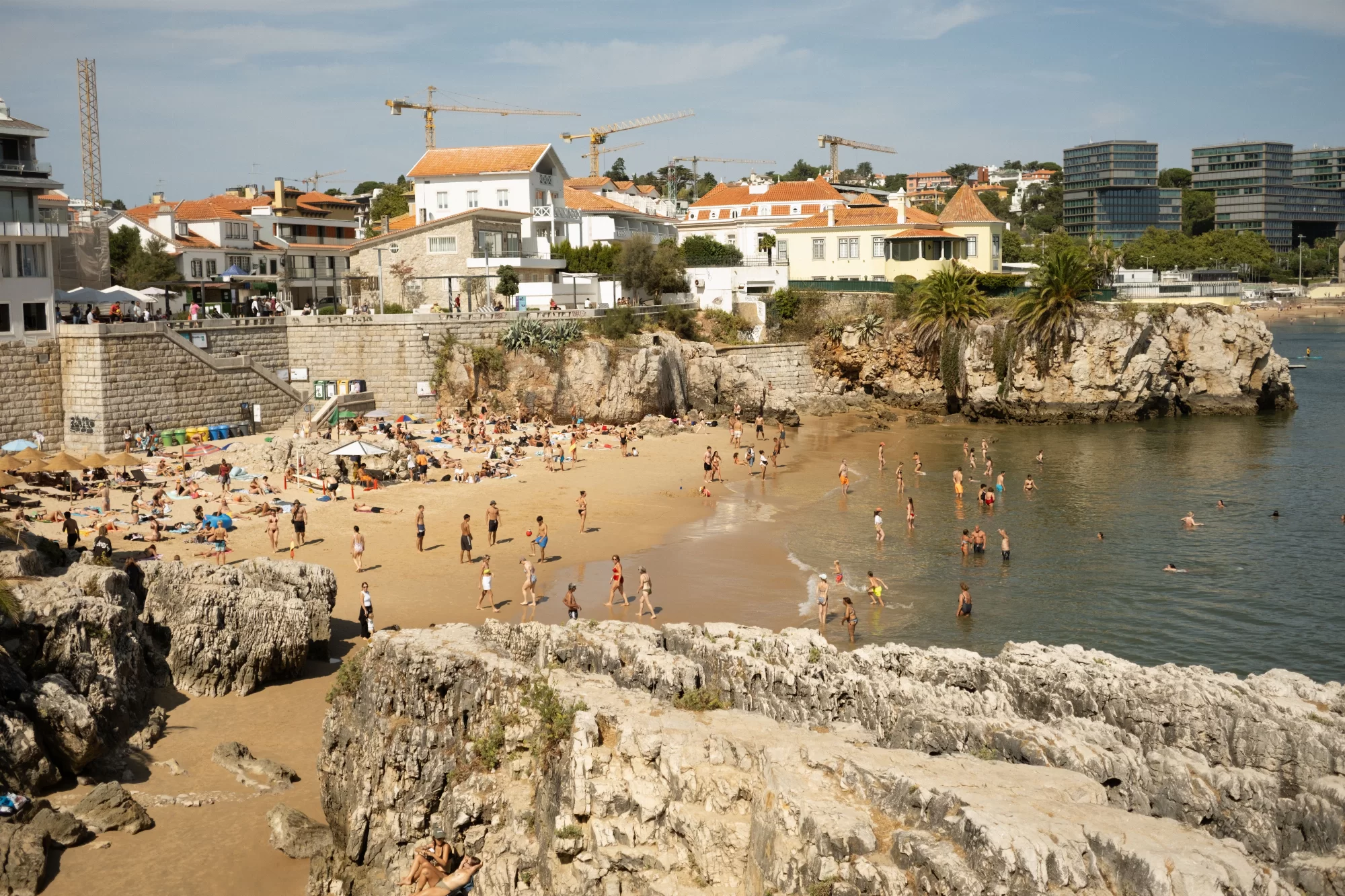
Expect unpredictable movement near Cascais Marina, Boca do Inferno and Casa da Guia, particularly at busy times. Someone looking towards the sea may step across a marked cycling line without checking. Children and dogs can change direction even faster. The practical response is not to argue about who should have looked first; it is to ride slowly enough that another person’s mistake does not become a collision.
Ordinary pavements are for pedestrians unless signs explicitly allow bicycles or identify a shared route. If you need to use a pavement, dismount and walk. The same principle helps in crowded pedestrian areas: being able to fit through a gap does not mean riding through it is appropriate. Local signs take priority over assumptions based on how other cyclists are behaving.
Zebra crossings cause particular confusion. A standard pedestrian crossing does not automatically give a mounted cyclist the same status or priority as a person on foot. Unless there is a marked cycle crossing or signal telling you otherwise, dismount and walk across after checking that traffic has stopped. At crossings with separate bicycle markings or lights, follow those controls and still make sure approaching drivers have seen you. Green means you may proceed; it does not guarantee that every turning driver is paying attention.
If this has you itching to get moving, our bikes are ready to go right inside Cascais Train Station — no need to book far ahead outside peak summer.
Browse Bike Rental →Lights, helmets and devices need a proper check
At the time of writing, Portugal does not impose a universal helmet requirement on every rider of a standard pedal bicycle. That is not a good reason to refuse one. A helmet is strongly recommended in Cascais, especially for unfamiliar roads, family rides and journeys extending beyond the central seafront. It should sit level, with the straps close around the ears and the chin strap secure. A loose helmet pushed back over the forehead offers far less protection than people imagine.
Electric bikes need extra care because legal requirements can depend on their power, assisted speed and technical classification. A normal pedal-assist rental may be treated differently from a faster powered cycle. Ask the operator what type of vehicle you are receiving and whether any special helmet, licence, insurance or road-use conditions apply. Do not rely on its appearance; two machines that look similar can fall into different legal categories.
Portuguese rules require appropriate lighting and reflectors during darkness and in conditions of poor visibility, including situations where a tunnel or bad weather makes a rider hard to see. Before setting off, confirm that the front and rear lights work rather than merely checking that they are attached. A rental inspection should also cover:
- Brakes: both levers should work firmly without touching the handlebar.
- Tyres: they should feel properly inflated and show no obvious cuts or bulges.
- Lights and reflectors: make sure they are clean, secure and visible around luggage.
- Bell: test it before reaching a shared section full of walkers.
- Saddle and helmet fit: adjust both before entering traffic, not at the first junction.
Do not ride while holding a phone. Stop somewhere safe if you need to check a map, send a message or change music. Portuguese road rules restrict device use while operating vehicles, and headphones can also prevent you from hearing bells, engines or warnings. Alcohol is another simple call: if you have been drinking enough to affect balance or judgement, do not cycle. The fact that a bicycle has no ignition key does not make impaired riding safe or exempt from road law.
Check current rules before your Cascais bike ride
Portugal cycling rules can be amended, while local signs and route arrangements may change sooner than travel articles are updated. Before riding, check the current Highway Code through the Diário da República and road-safety information from the Autoridade Nacional de Segurança Rodoviária. For temporary diversions or locally managed cycling spaces, consult information from the Municipality of Cascais and obey the signs on the ground.
Renting a bike here takes about two minutes at the counter, and it's usually the fastest way to actually do what's described above.
Book a Bike →A local bike rental team should explain the controls, provide suitable safety equipment and flag any route-specific issue that day. Ask direct questions: whether a proposed section is shared, where the cycle markings end, and which junctions are awkward for first-time visitors. This is more useful than accepting a bike and trying to decode everything while moving.
For an easy first ride, begin somewhere calm and give yourself time to understand the bicycle before heading towards busier coastal sections or the route in the direction of Guincho Beach. Poor weather, limited mobility, very young children or discomfort with traffic are all sound reasons to choose a guided outing or vehicle transfer instead. Cycling should feel controlled, not like an obligation.
The best bike safety in Cascais comes from combining the law with courtesy: ride predictably, slow down around pedestrians, walk uncertain crossings and never assume that another road user has seen you. Learn those habits before your first kilometre and the rules become part of the ride rather than an interruption to it.