If your last bike ride was ten or twenty years ago, do not make the hills towards Sintra your first test. Cascais cycling for beginners is much more enjoyable when you begin beside the sea, spend time getting comfortable with the bike and only add distance once braking, turning and changing gear feel familiar again. This guide covers rental bike sizing, a sensible first route, basic Portuguese road rules and how to judge whether you are ready to ride beyond Cascais.
Choose comfort before speed at the bike rental
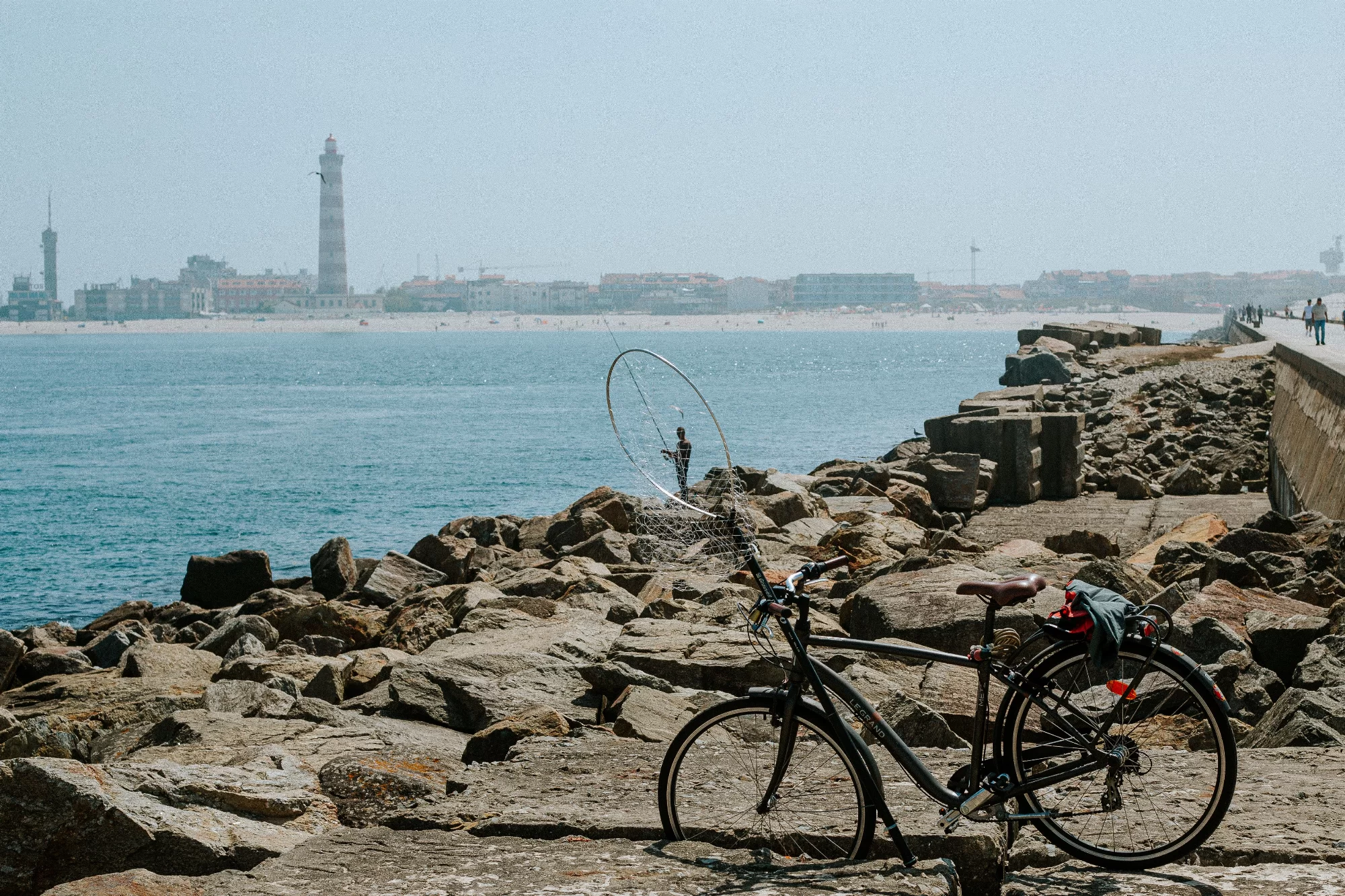
A first-time bike rental should begin with fit, not colour or appearance. Standing over the frame should feel comfortable, and the saddle needs to be high enough for efficient pedalling without forcing you to stretch for the ground. At the bottom of each pedal stroke, your knee should remain slightly bent. If your hips rock from side to side as you pedal, the saddle is probably too high.
Tell the rental staff honestly how recently you have ridden, where you intend to go and whether hills worry you. For an easy Cascais seafront ride, a straightforward city or hybrid bike usually gives a stable, upright position. An e-bike is the better choice if you hope to cover more ground, dislike steep climbs or are riding with someone much fitter. Electric assistance does not remove the need to balance, brake and steer, so practise those basics before selecting a higher assistance level.
Before leaving, squeeze both brake levers and learn which one controls each wheel. Check that you can change gears while pedalling gently, place a foot down without struggling and remove the bike from any stand or lock supplied. Tomorrow’s Adventure is based at Cascais Train Station, which makes the surrounding quieter streets a practical place to confirm the fit before committing to the coast.
Spend ten minutes learning the bike again
Balance often returns quickly; confidence takes a little longer. Find a quiet, level space and begin with short starts and stops. Keep your eyes ahead rather than staring at the front wheel. Practise braking progressively with both brakes, because grabbing one lever suddenly can unsettle the bike, especially on sand, damp paving or loose gravel.
Most of what's covered here is easiest to reach by bike. We're right at the train station whenever you're ready to grab one.
Rent a Bike →Run through a few simple movements before joining a busier path:
- Start in an easy gear and pedal smoothly rather than pushing hard against a heavy gear.
- Brake before a corner, then release some pressure as you turn.
- Look behind briefly while holding a straight line.
- Signal clearly before changing direction, but keep both hands on the bars over rough surfaces.
- Stop, step off and walk whenever a junction or crowded section feels confusing.
A successful first ride is not measured in kilometres. It is the ride that leaves you comfortable enough to cycle again tomorrow.
Begin with the Cascais seafront rather than the Sintra hills
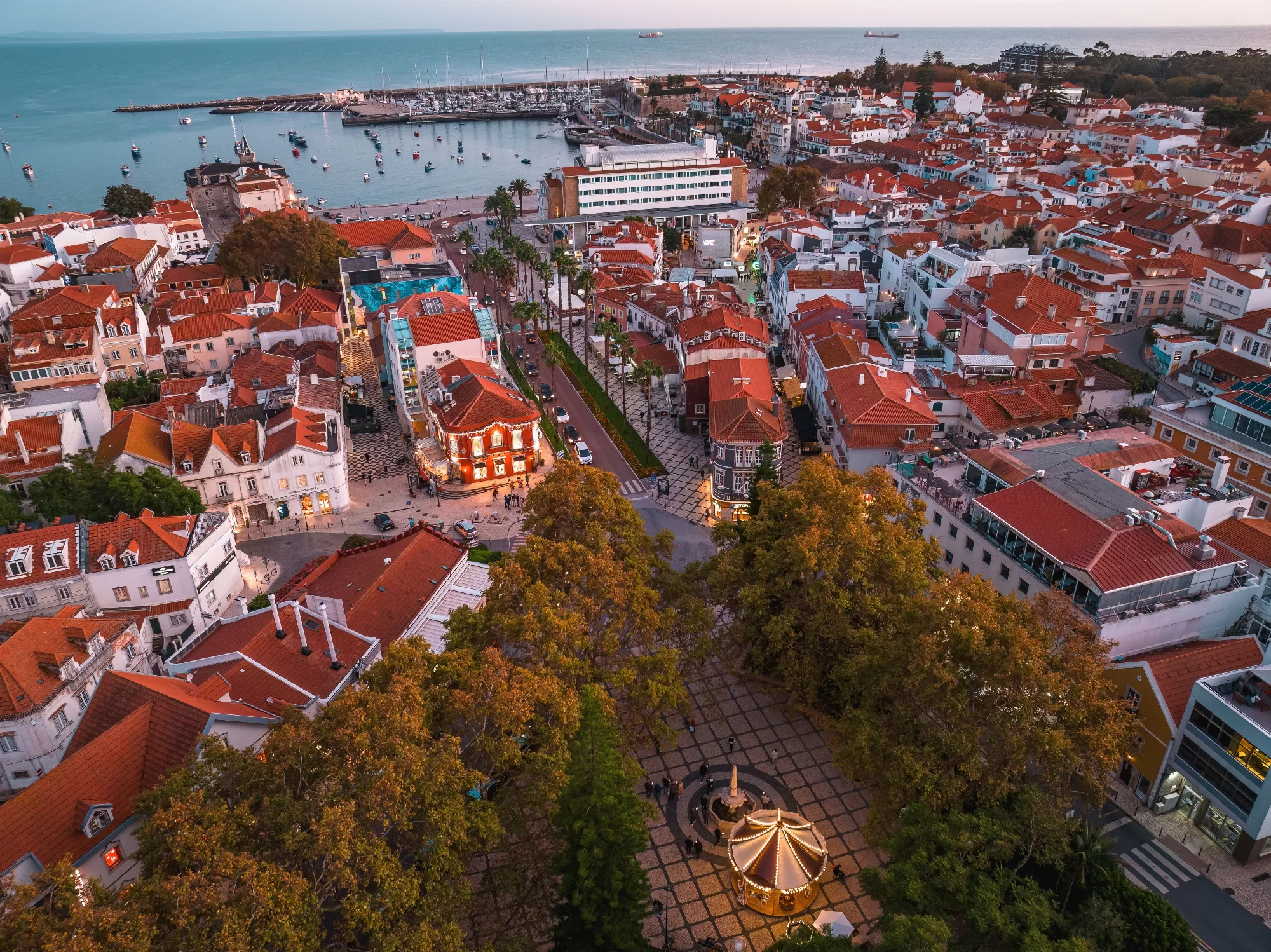
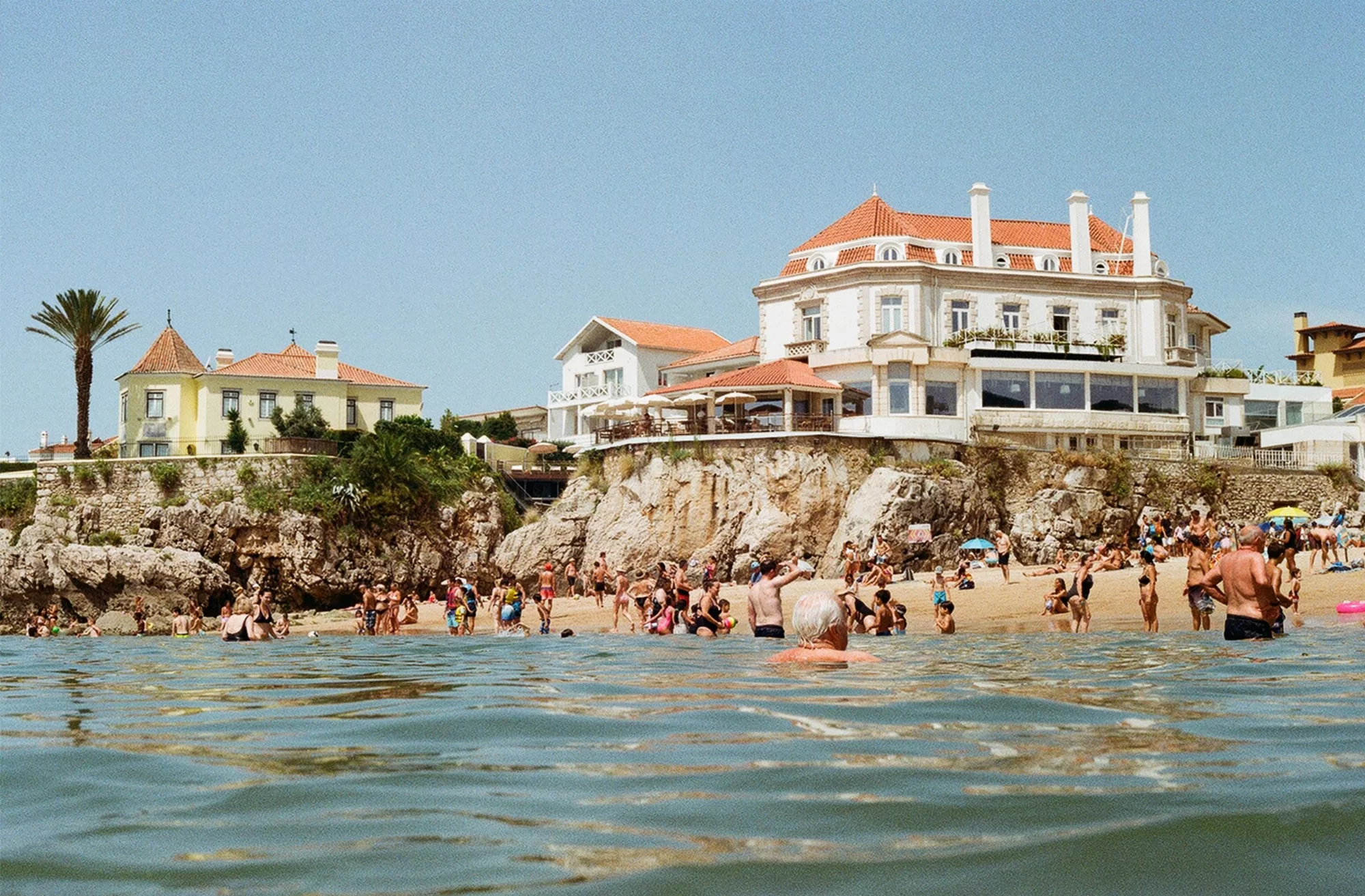
The coast west of central Cascais is the best place to settle into a rhythm. From the town and marina area, the seafront route leads towards Boca do Inferno and continues in the direction of Casa da Guia and Guincho. The ocean remains close, navigation is simple and you can turn around whenever your legs have had enough. Wind is the main surprise: a relaxed outward ride can become harder on the return if the breeze changes direction or strengthens.
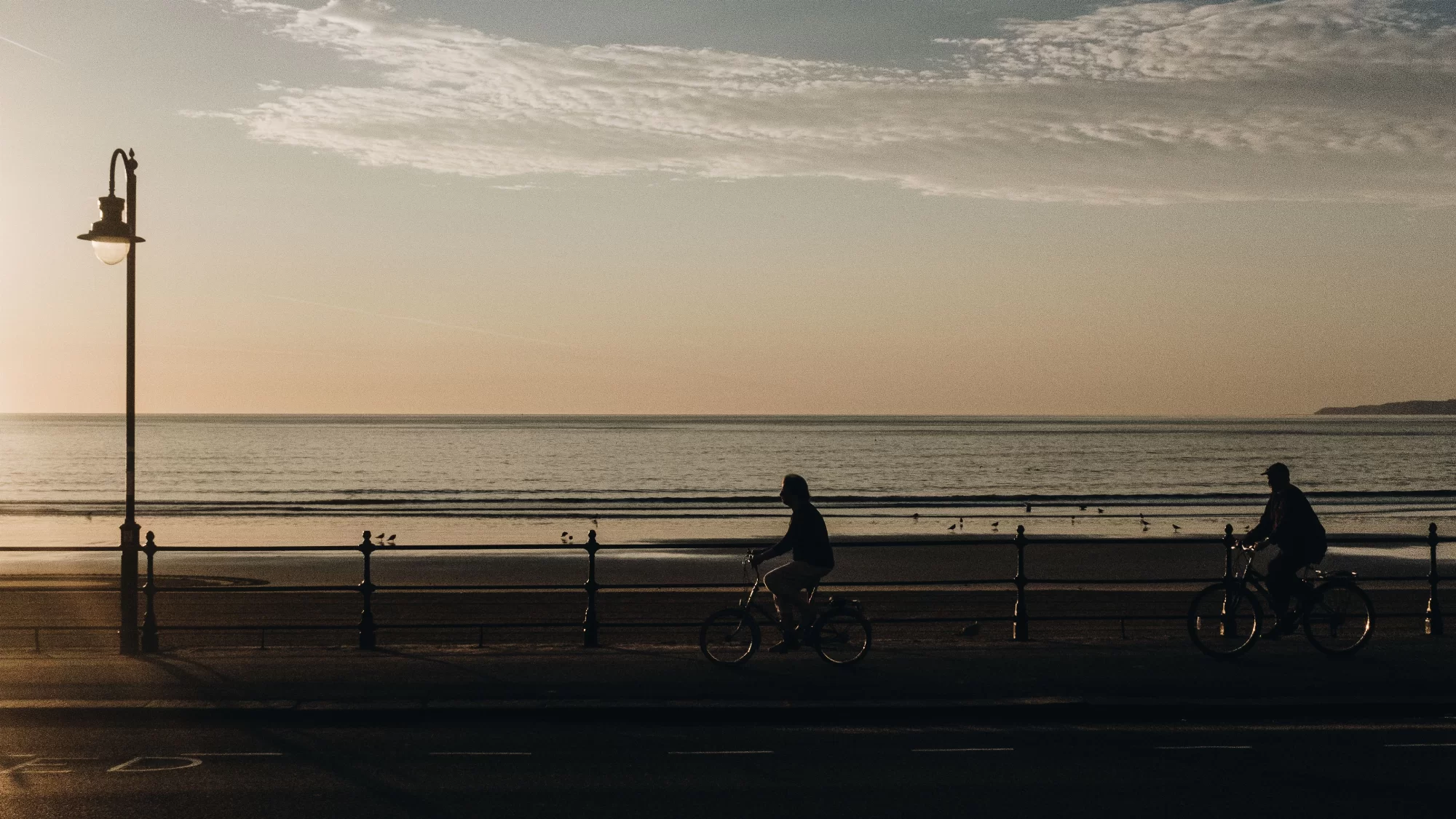
People often call the whole waterfront a boardwalk, but not every seaside surface is a cycle lane. Use marked cycling sections where they exist, slow down on shared paths and dismount on pedestrian-only stretches or anywhere crowded with walkers, children and dogs. Painted lanes can also cross entrances and car parks, so watch for vehicles turning across your path. Early in the day is generally calmer than the busy middle of a sunny afternoon.
If this has you itching to get moving, our bikes are ready to go right at Cascais Train Station — no need to book far ahead outside peak summer.
Browse Bike Rental →For a genuine first ride, choose time rather than distance as your limit. Ride gently for twenty or thirty minutes, pause, and assess your hands, shoulders and confidence. Mild effort is normal. Numb fingers, knee pain or repeated difficulty controlling the bike means something needs adjusting before you continue.
Follow the basic cycling rules in Portugal
On Portuguese roads, bicycles are vehicles. Ride on the right, follow traffic lights and road signs, and use a cycle lane where local signs require it. Do not assume a pavement is open to bikes simply because it is wide. Shared paths and pedestrian areas are indicated locally, and pedestrians should always be given space.
Be particularly cautious at roundabouts and side roads. Drivers may not expect a hesitant cyclist to change position suddenly, so make your direction predictable and avoid squeezing alongside a vehicle that could turn across you. Use clear hand signals when it is safe, keep enough distance from parked cars for a door to open, and never use a handheld phone while moving. A helmet is a sensible choice on every ride, regardless of the minimum legal requirement for a particular type of bicycle. Lights and visible clothing matter in rain, mist, tunnels and fading evening light.
Save the ride towards Sintra until you feel ready
Sintra looks close on a map, but the journey is not simply a longer version of the Cascais waterfront. Routes towards the hills bring sustained climbing, faster descents, bends, changing road widths and more interaction with traffic. Weather can differ too: bright conditions by the marina may become cooler, mistier or wetter at higher ground. A rider who has only just regained balance should not treat Sintra as the automatic next step.
We keep a full range of sizes — plus a few e-bikes for windier days — at the station, if you'd rather ride than walk between these spots.
See Our Bikes →Consider it after you can start on an incline, change into an easier gear before a climb, look behind without swerving and brake confidently on a descent. An e-bike reduces the physical strain but does not make narrow roads or downhill corners easier to handle. If those conditions sound stressful, stay with the coast or choose a guided ride where route selection and pacing are handled by someone familiar with the area. A transfer is more suitable for anyone who wants to visit Sintra’s monuments without cycling the climb.
Your first Cascais ride should feel deliberately easy. Get a bike that fits, practise close to the centre, follow the marked coastal route and turn back before fatigue affects your attention. Sintra will still be there after your handling skills return, and the ride towards it will be far better once you are looking at the scenery instead of worrying about every gear change.