Este artigo está disponível apenas em inglês.
Alfama can turn a ten-minute walk into a forty-minute detour, usually because a promising lane becomes a staircase or a viewpoint persuades you to stay. This one-day Alfama itinerary avoids unnecessary backtracking: travel from Cascais to Lisbon, begin near Lisbon Cathedral, climb to two classic viewpoints, then work downhill through residential streets towards Santa Apolónia. You will still meet steep paving and uneven steps, but the day remains manageable rather than becoming an endurance test.
Getting from Cascais to the start of the walk
Take the train from Cascais to Cais do Sodré in Lisbon, checking the current timetable before leaving. From Cais do Sodré, the Metro is the most predictable way to continue: travel to Baixa-Chiado, then walk through the lower city towards Lisbon Cathedral, usually called the Sé. A taxi or private transfer directly to the cathedral is the more comfortable choice if anyone in your group struggles with hills, heat or cobbles.
Although renting a bike is one of the best ways to explore the Cascais coast, bringing one to Alfama is not a smart shortcut. The district has staircases, polished cobbles, tight corners and busy pedestrian lanes where you would spend more time pushing than riding. Save the bike for a separate Cascais day and treat this as a deliberately slow walking route. A guided Lisbon tour also makes sense for visitors who want historical explanation or do not want to navigate independently.
Begin at the Sé and climb before the streets get busy
Lisbon Cathedral makes a clear starting point because it is easy to identify and sits on the western edge of Alfama. Pause outside to take in its heavy stone façade, then decide whether you want to visit the interior. Do not automatically add every ticketed monument to the schedule. One substantial indoor visit is enough for this itinerary, particularly if you also plan to enter Castelo de São Jorge later.
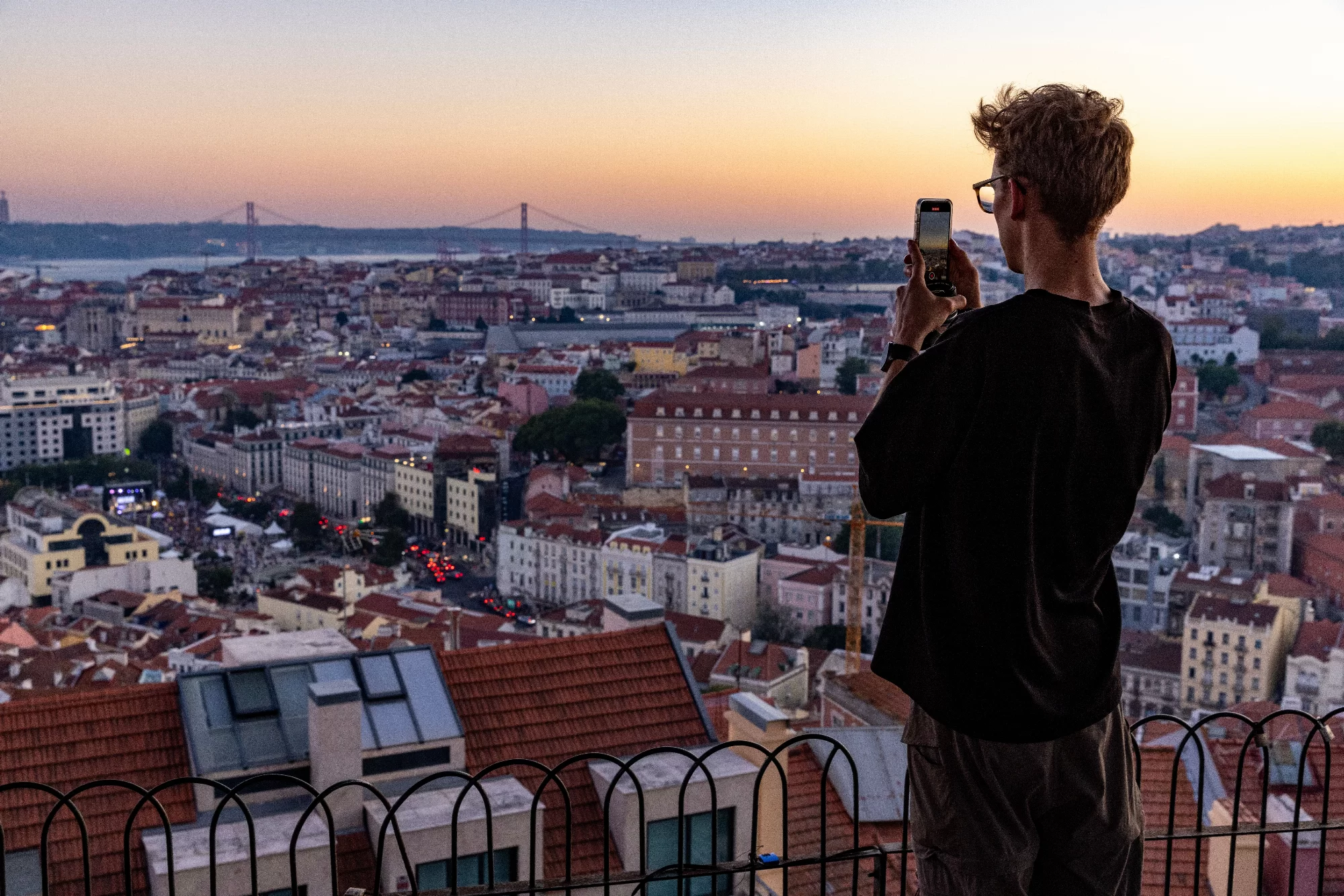
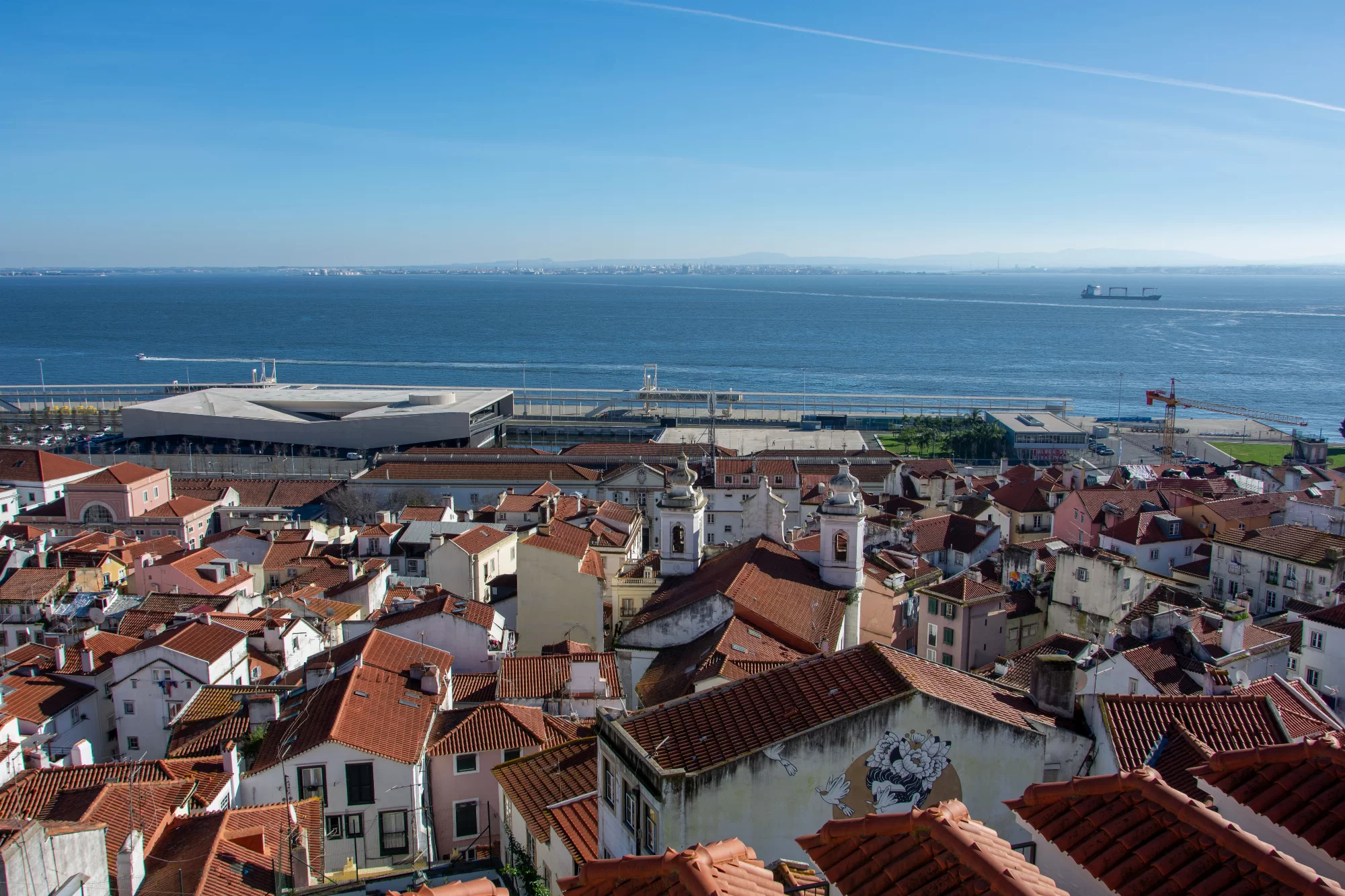
From the cathedral, follow the rising streets towards Miradouro de Santa Luzia. The route is short but noticeably steep, and the stone can be slippery after rain. Santa Luzia has tiled decoration, shaded seating and views over Alfama’s roofs towards the Tagus. Just beyond it, Miradouro das Portas do Sol opens onto a broader panorama. These viewpoints are close together, so see both rather than trying to choose between them.
Muito do que torna isto complicado desaparece quando não é você a conduzir nem a navegar — é basicamente para isso que serve um transfer privado.
Organizar um transfer →In Alfama, the best route is a spine, not a script: keep a few fixed landmarks and allow the smaller lanes to surprise you.
From Portas do Sol, Castelo de São Jorge is an optional uphill detour. The castle rewards visitors who enjoy battlements, archaeology and wide city views, but it can absorb a large part of the morning. If the entrance queue is long or your legs are already protesting, skip it without regret. The neighbourhood itself is the main event.
Continue east before making the easier descent
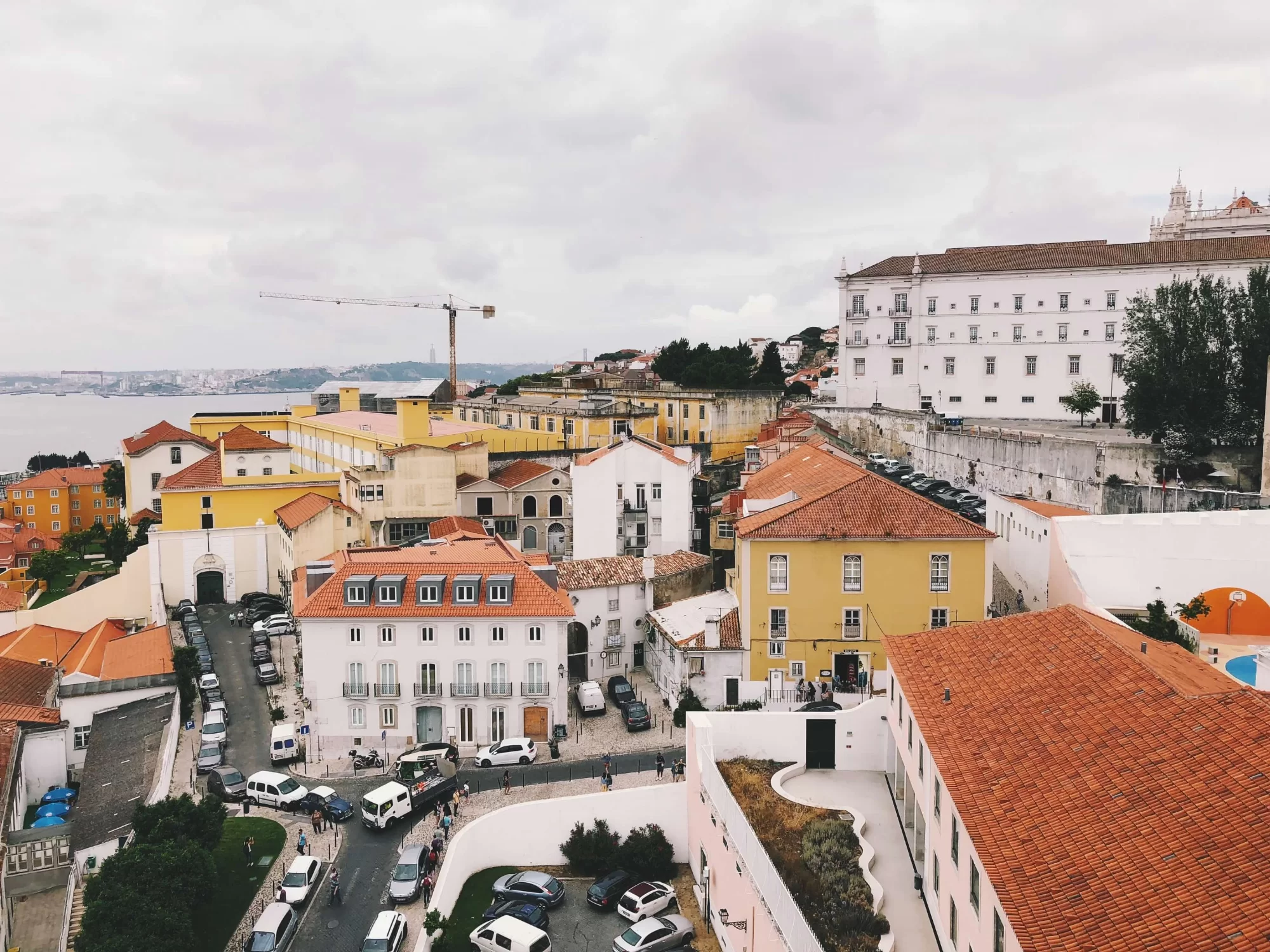
After the viewpoints, continue towards the area around São Vicente de Fora, immediately east of Alfama’s best-known lanes. The monastery’s pale façade and the open space of Largo de São Vicente provide an easy navigation point after the enclosed streets. On Tuesdays and Saturdays, the nearby Feira da Ladra flea market may add browsing time, although schedules and individual stalls can change.
This is a sensible area for lunch. Choose a small restaurant or café away from the most crowded viewpoint terraces, and allow yourself a proper break rather than eating while walking. Alfama’s paving demands concentration, especially on the descent. A heavy lunch followed by a fast downhill march is not an appealing combination.
Se ainda está a decidir como lá chegar, um transfer privado reservado com antecedência resolve essa decisão por si.
Ver opções de transfer →Afterwards, head down towards the National Pantheon and Rua dos Remédios. From there, work west through the lower Alfama streets towards Largo do Chafariz de Dentro and the Fado Museum. The museum is the strongest indoor choice if you are interested in Lisbon’s fado tradition; otherwise, use the square as a final anchor point before continuing to Santa Apolónia for the journey back.
How to handle Alfama’s hills without getting lost
Comfortable shoes with proper grip matter more here than stylish trainers with smooth soles. Alfama includes steep gradients, irregular calçada paving, kerbs and staircases that may not be obvious on a map. In warm weather, carry water and do the main climb early. In rain, shorten your stride and use handrails where available; the polished stone can become surprisingly slick.
Phone navigation helps, but do not follow it blindly. Mapping apps sometimes treat long staircases as ordinary streets or send walkers through awkward passages to save a minute. Keep four anchors in mind: the Sé, Portas do Sol, São Vicente de Fora and Santa Apolónia. If you become disoriented, aim for the next anchor rather than repeatedly recalculating a perfect route.
- For the gentlest day: start by taxi at Portas do Sol, then follow the route downhill.
- For the full walk: begin at the Sé and accept one concentrated climb in the morning.
- For bad weather: prioritise the cathedral or Fado Museum and reduce the residential wandering.
- For families: avoid taking a pushchair into stair-heavy side lanes unless you are comfortable carrying it.
Remember that Alfama is a neighbourhood, not a set
People live behind the tiled façades, dry laundry above the lanes and use the same doorways that visitors stop to photograph. Keep voices down in narrow residential streets, leave entrances clear and never photograph residents at close range without asking. Decorative tiles, plants and objects outside homes are private property, even when they look picturesque.
O transporte porta a porta elimina grande parte das dificuldades descritas acima — vale a pena se viaja com bagagem ou com pouco tempo.
Reservar transfer →Fado also deserves restraint. Music drifting from a window or restaurant is not an invitation to crowd the doorway, and an evening performance works better as a separate plan than something squeezed into an already full afternoon. If you want to return for dinner and fado, go back to your accommodation first and give the experience its own time.
From Santa Apolónia, take the Metro towards Baixa-Chiado, change for Cais do Sodré, and reconnect with the train to Cascais. Check evening service information rather than assuming the connection will match your arrival. By finishing east of the streets where you began, you avoid climbing back through Alfama and end the day with a route that feels complete: one steady ascent, an unhurried descent and enough empty space to notice the neighbourhood between its landmarks.